Fox walking is one of the oldest and most practical movement skills a human can learn. It’s how indigenous trackers moved through forests without startling wildlife. It’s how scouts and hunters closed distance on prey without making a sound. And it’s how you can move through the woods, fields, or any wild place in a completely different way than the heavy, heel-first stomping most of us default to. This guide breaks down the fox walk step by step, explains the wide-angle vision technique that pairs with it, and answers the most common questions people ask about fox-walking and fox behavior.
What Is the Fox Walking Method?
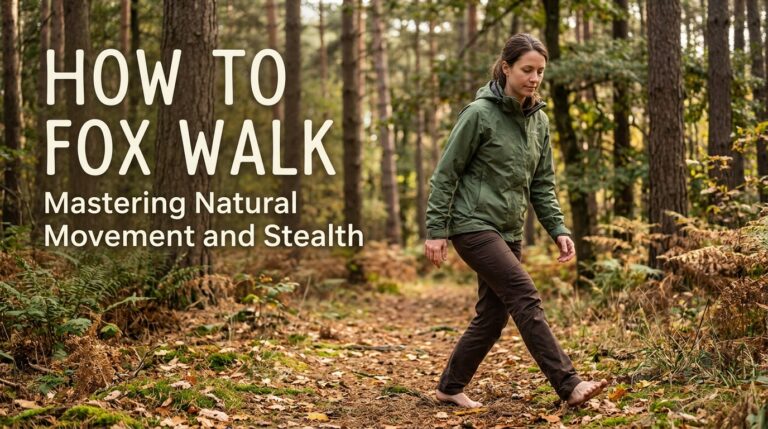
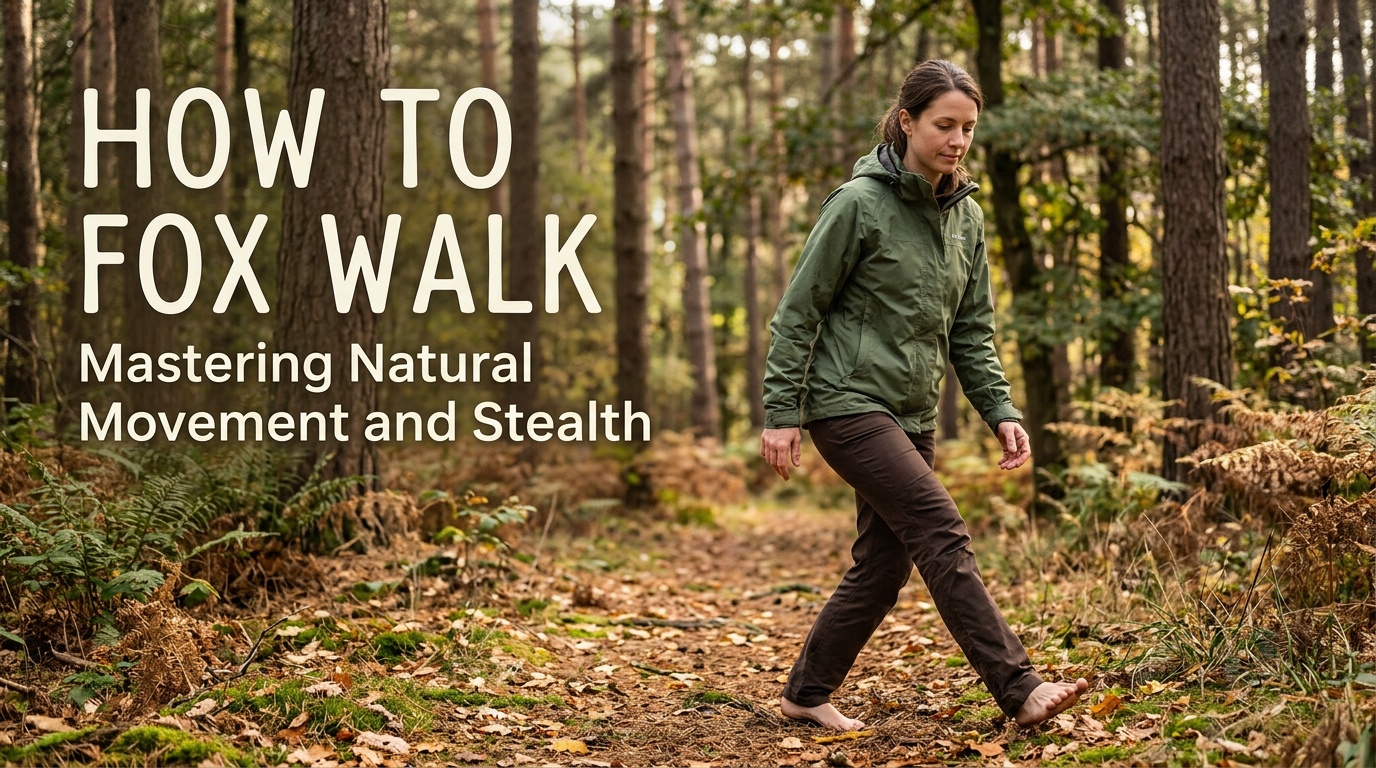
The fox walking method is a slow, deliberate way of moving through the wilderness that prioritizes silence, balance, and awareness. Instead of striking the ground heel first like most people do in shoes, a fox walker places the outside ball of the foot down first, rolls the sole inward, then lowers the heel last. Only after the foot touches the ground and you’ve confirmed there’s no twig, debris, or other hazard underneath do you commit your full weight.
The technique gets its name from how foxes actually move. A fox places its back foot directly into the track left by its front foot, walking in a straight line with precise foot placement. This is called a direct register. It produces minimal noise and minimal disturbance to the ground. Tom Brown Jr., the legendary tracker who popularized this technique through his Tracking School in New Jersey, taught that fox walking is the natural human way to walk. Babies do it instinctively before we strap shoes on them.
How to Fox Walk: Step-by-Step Breakdown
Here’s the basic technique. Practice it slowly. Speed defeats the purpose.
Step 1: Bend your knees slightly. Keep them soft, not locked. This lowers your center of gravity and gives you better balance and shock absorption. Your posture should be upright but relaxed.
Step 2: Lift one foot and bring it forward with a short stride. Don’t lunge. Short steps are essential. Your back foot should still carry most of your weight. You want the ability to retract your leading foot if you feel something sharp or noisy underneath.
Step 3: Place the outer edge of your foot down first. The outside ball of your foot (near the little toe) makes contact first with light pressure. This is the key difference from normal walking, where the heel strikes first and roll forward.
Step 4: Roll your foot laterally inward. From the outside ball, roll across to the inside ball of your foot. Then slowly lower your heel to the ground. Think of it as a three-point landing.
Step 5: Transfer your weight. Only after your foot is flat and you’ve confirmed the ground is safe do you shift your full weight onto that foot. Then gently lift your back foot and repeat.
Step 6: Walk in a straight line. Place your feet directly in front of each other, as if walking along a tightrope or the white line on the side of a road. This mirrors how a fox moves and creates maximum balance with minimal noise.
The whole process should be slow. Tom Brown designed the fox walk specifically to slow people down. Most of us move through the woods at a pace that’s way too fast to notice anything. Fox-walking forces you to feel the ground, stay present, and actually experience your surroundings.
Why Does Foot Placement Matter So Much?
When you walk heel down first, you’re slamming your body weight into the ground with each step. That sends vibrations through the soil that animals can detect from a distance. Mud turtles can sense it through their shells. Deer can feel it through the ground. Birds hear it and scatter. You might as well be announcing yourself with a bullhorn.
Fox walking reverses this. By landing on the ball of your foot first, you can consciously compress leaves, sticks, and other debris silently beneath your sole. You can feel a twig before you snap it. You can detect a sharp rock before it stabs your foot. The technique gives you time to make decisions with each step instead of crashing forward on autopilot.
This is also why many trackers practice barefoot or in minimal footwear like moccasins. Without shoes, the nerve endings in your feet become powerful sensors. You can walk through a forest without looking at the ground because your feet tell you everything you need to know about what’s underneath them. That said, any soft-soled shoe works. Stiff boots and sneakers make fox walking much harder because you can’t feel the ground through them.
What Is Wide-Angle Vision and Why Use It While Fox Walking?
Wide-angle vision (also called splatter vision or peripheral vision) is the visual counterpart to fox walking. Instead of focusing your eyes on one point in front of you, you relax your gaze and take in the full 180-degree field of view. You can see movements on both sides of your body simultaneously without turning your head.
Try this: hold your arms straight out to the sides while looking forward. Keep your head still and try to perceive both hands at the same time. That expanded field of view is wide angle vision. Using wide-angle vision while fox walking means you don’t need to stare at the ground. Your feet handle the terrain. Your eyes handle everything else.
This combination is what makes stalking an animal possible. A tracker using the fox walk with wide angle vision can move through a forest keeping their eyes on a deer while their feet silently navigate the ground. You see more. You hear more. You become part of the environment instead of a disturbance crashing through it.
How Do You Practice Fox Walking as a Beginner?
Start at home. Walk across your living room floor barefoot using the technique described above. Focus on landing on the outside ball of your foot, rolling inward, and lowering the heel last. Keep your knee bent and your steps short. Feel how different it is from your normal walk.
Once that feels natural, take it outside. A grassy field is ideal for your first outdoor session. Grass is forgiving and quiet. Walk slowly for 10 to 15 minutes. Don’t try to cover distance. The goal is to rewild your movement patterns and retrain muscles that have been dormant for years. Fox walking activates the gluteus maximus with every step, a muscle that barely engages during normal heel-first walking.
After you’re comfortable on grass, move to a forest trail with leaves and debris. This is where the real practice begins. Can you walk without snapping a single twig? Can you cross a patch of dry leaves silently? It takes time. But even a week of practice will dramatically change how you move through the woods.
Can You Fox Walk in Shoes?
Yes, but the type of footwear matters. Moccasins are the traditional choice because they’re thin and flexible enough to let you feel the ground. Minimal running shoes or thin-soled trail shoes also work well. The key is a sole that’s flexible enough to let your foot roll from the outer edge to the ball naturally.
Heavy hiking boots and stiff sneakers make fox walking very difficult. The thick soles block the sensory feedback from your feet and force you back into a heel-first stride. If you can’t go barefoot or in moccasins, choose the thinnest, most flexible shoe you have. Some people practice without shoes at first to learn the mechanics, then transition to minimal footwear for rougher terrain.
What Is the Fox Walk Stalk Technique?
The stalk takes the fox walk to its extreme. Instead of walking at a slow pace, you move at roughly one step per minute. Every motion is flowing. Nothing is jerky or sudden. Animals see movement, and they’re wired to detect sudden, unnatural motion. A slow, flowing movement looks like wind. A quick, choppy step looks like a predator.
When stalking an animal, you keep the animal in the center of your wide-angle vision. If the animal looks up, you freeze completely and hold your position until it relaxes. You use your entire body as a receptor. Anything you brush against, you flow around. It is better to take 20 quiet steps around a bush than 3 noisy steps through it.
Tom Brown taught that a skilled tracker using this stalk technique could walk across low grass upright and get close enough to touch a deer. That’s not exaggeration. It’s a skill that indigenous people used for thousands of years and one that anyone willing to put in the dirt time can develop.
What Is the Fox Run?
The fox run uses the same foot mechanics as the fox walk but at running speed. You still land on the outside ball of your foot and roll inward, but you bend your knee more aggressively to absorb impact. The faster you move, the more you commit your weight forward and the less time you have to “feel” each step. That means you need to scout the ground ahead of you visually as you move.
Start a fox run with your feet shoulder-width apart, then gradually narrow your stance until your feet land in a straight line, just like a fox. Keep arm swing minimal and shoulder movement slight. Build up slowly. Ten to fifteen minutes, three to four times per week, is plenty when you’re starting out. The muscle engagement is intense because you’re using foot, ankle, and leg muscles that standard running ignores.
Is Mating Painful for Foxes?
This is a common question that pops up alongside fox-related searches, so let’s address it directly. Yes, mating can appear painful for foxes, particularly red foxes. Male foxes have a bulbous gland at the base of the reproductive organ that swells during mating, creating a “copulatory lock” or “tie” that can last 15 to 30 minutes. During this period, the pair is physically locked together and may vocalize loudly. The female may cry out or appear distressed. This locking mechanism is common across canids (dogs, wolves, foxes) and is believed to increase reproductive success, but it does appear uncomfortable for both animals.
How Do Foxes Say “I Love You”?
Foxes don’t use words, but they do show affection in recognizable ways. Bonded fox pairs groom each other, sleep curled up together, and engage in play behavior like chasing and gentle nipping. Red foxes are known for a greeting ritual where they approach each other with ears forward and tails wagging, then touch noses and rub faces together. Vocalizations also play a role. Foxes produce a wide range of sounds, and paired foxes have specific soft calls they use with their mate that differ from their territorial screams or alarm barks. Parent foxes also show affection to kits through nuzzling, food sharing, and gentle play.
What Is the Most Silent Way to Walk?
The most silent way to walk is the fox walk combined with the stalking technique. Landing on the ball of your foot first, rolling the sole down slowly, keeping your knees bent, and taking short deliberate steps is the quietest method of overland travel a human can achieve. Practicing barefoot or in moccasins on bare feet maximizes your ability to feel debris before compressing it.
Add wide-angle vision so you can keep your eyes up instead of staring at the ground. Walk in a straight line with precise foot placement. Move at a pace slow enough that your foot touches the ground with zero impact. Done correctly, you can cross dry leaves, forest floors, and rocky terrain walking quietly enough that wildlife won’t register your presence. This is the skill that every scout, tracker, and predator in history has relied on, and it’s available to anyone willing to practice.
Start Moving Like a Fox: Key Takeaways
- The fox walk lands on the outside ball of your foot first, rolls inward, then lowers the heel last
- Keep your knees bent, your posture relaxed, and your steps short
- Walk in a straight line with feet placed directly in front of each other
- Use wide-angle vision (180-degree peripheral awareness) to keep your eyes up while your feet navigate the ground
- Practice barefoot or in minimal footwear to maximize sensory feedback from your sole
- The fox walk was popularized by Tom Brown Jr. and is rooted in indigenous tracking and wilderness awareness traditions
- Start practicing at home, then move to grass, then to forest trails with leaves and debris
- Fox walking is a form of rewilding your natural movement and functions as a powerful walking meditation
- The stalk technique slows the fox walk to one step per minute for approaching wildlife without causing disturbance
- The fox run applies the same foot mechanics at running speed, building strength in muscles that normal running ignores
- Anyone can learn this skill with consistent practice, whether you’re a hunter, a hiker, or just someone who wants to experience nature in a completely different way
About the Author