Missing 411: The UFO Connection’s Strangest Missing Person Cases
Missing 411: The UFO Connection builds its story around disappearances in remote forests, lakes, high desert, and hunting country. The cases are not presented as ordinary lost-person stories. They are framed around strange overlap: missing hunters, failed scent trails, sudden weather, unusual lights, and people who vanish in places they knew well.
Below are the key missing people and related cases discussed in the documentary transcript.
Ray Salmen: The Hunter Who Vanished at Harrison Lake
Ray Salmen is one of the documentary’s central cases. He disappeared near Harrison Lake in British Columbia after setting up camp along the shoreline. According to the film, Ray was experienced in the outdoors. He had been to the area many times before, brought dogs, a camper, a raft, firearms, and the normal gear of a man who knew what he was doing.
What makes the case so odd is what was left behind.
His truck and camper were found locked. His dogs were inside. His belongings were still at camp. The documentary makes a point of saying Ray would not normally leave the dogs behind if he went hiking. Later, searchers found scattered items, including clothing, a rifle, a backpack, and a pistol. But they did not find Ray. Dogs reportedly failed to pick up a useful scent trail, and no body was recovered.
The film also ties the area to reports of strange lights. Ray and his wife had previously seen a fast-moving light near Fire Lake that made sharp turns, and the documentary mentions an older RCMP document about a cylindrical UFO report in the general area.
DeOrr Kunz: The Child Disappearance Connected by Geography
DeOrr Kunz is not explored in the same depth here as Ray Salmen or the Wyoming hunters, but the documentary brings him into the map pattern. David Paulides says the triangular UFO sighting by hunters in Idaho was geographically close to the location where DeOrr disappeared.
That is the important point in this film’s structure. DeOrr’s case is used as part of a larger wilderness pattern. The documentary does not retell the full case in this section. Instead, it places DeOrr’s disappearance near other strange incidents, including the triangular craft sighting and the Ray Jones case.
Ray Jones: Found After 53 Years

Ray Jones was a 39-year-old service station owner who vanished during a hunting trip with friends. According to the documentary, the group separated, Ray disappeared, and he remained missing for 53 years.
Then came the strange part.
The film says Ray was eventually found at the bottom of a boulder field in an area that had already been searched many times. Paulides highlights this as one of those unsettling Missing 411 details: a person is not found during the original search, then suddenly appears in a place searchers had already covered.
The documentary also notes that Ray Jones, DeOrr Kunz, and the triangular UFO sighting form a neat triangle on the map. That does not prove anything by itself. But for the film’s argument, the geometry becomes another strange detail stacked on top of the others.
Reinhard Kirchner: The German Physicist in Arizona
Reinhard Kirchner was a German physicist who disappeared in Arizona in April 2007. In the documentary, he had traveled from Germany, rented a camper truck, parked on Navajo property, and set out for a hike.
He was supposed to meet his girlfriend at McCarran Airport in Las Vegas. He never showed up.
Searchers found his truck, but not Reinhard. The documentary says he had taken his camera and a small backpack, then “walked into oblivion.” It also notes that local ranchers reported unusual lights in the sky during the time he was gone, and that those reports were treated as credible enough to be placed in the official report.
Kirchner and his property were never found, according to the transcript.
Carl Higdon: The Man Who Came Back
Carl Higdon is different from the others because he did return. Still, the documentary treats his 1974 case as one of the most important in the whole film.
Higdon said he was hunting elk in Medicine Bow National Forest when his bullet seemed to hit an invisible force and fall to the ground. He then described seeing a strange transparent cube-like craft and meeting a being called “Ozo.” According to Higdon, he was taken aboard, saw elk inside the craft, and was later returned after being told he was not what they needed.
The film emphasizes the physical strangeness of the case. The bullet was reportedly recovered and analyzed. Higdon was taken to a hospital. The documentary also says his lung x-rays showed clear lungs, which was treated as unusual because he had prior tuberculosis scarring. Carl later took multiple lie detector tests, and the film says the result was that he was telling the truth as he understood it.
For Missing 411’s larger theory, Higdon matters because he is the rare “returned” case. He also fits the documentary’s Wyoming hunter pattern: elk, Medicine Bow, German surname, and a claimed UFO encounter.
Mark Strittmater: The Veteran Outfitter Who Vanished in 2019
Mark Strittmater disappeared on October 19, 2019, while elk hunting in the Medicine Bow National Forest. The documentary says this happened almost exactly 35 years after Carl Higdon’s October 25, 1974 incident and in a relatively similar area.
Mark was not portrayed as a reckless amateur. He was described as a veteran outfitter who knew the outdoors, knew how to track, and understood elk behavior. He pulled his vehicle to the side of the road, left some items behind, and apparently went out with a light coat, a small pack, and a gun.
His girlfriend later found his truck after a snowstorm. Inside were his phone, cigarettes, and medication. Mark was gone.
Searchers covered the area with ground teams, drones, Civil Air Patrol, and dog teams. According to the transcript, the canines did not get a scent hit. No tracks or property were recovered. The next day’s weather also became part of the story, since a storm moved in after he disappeared.
The documentary adds one more chilling detail. Mark had previously told his girlfriend he saw a black object hovering and following him while he was out hunting. She said he was frightened by it and was not the type to make things up.
Charles Gustafson: The Prepared Hunter Who Never Came Back
Charles Gustafson was a 72-year-old hunter from Minnesota who disappeared in the Medicine Bow National Forest in October 2006. He was hunting with family, then split off to cover a different area.
He had survival training. He had a GPS, compass, food, and water. According to the documentary, he had been to the area before and was not someone who should have easily gotten lost.
Searchers used foot teams, four-wheel-drive vehicles, horseback searchers, helicopters, Civil Air Patrol, and dogs. The search lasted about six days before weather forced it to stop. Dogs did not find a scent trail leading to him. Later, his rifle was found leaning in the fork of a tree near Rock Creek Canyon. His fanny pack was found nearby. Nothing else was recovered.
The documentary places Gustafson in the same larger Wyoming pattern as Higdon and Strittmater: elk hunters, Medicine Bow, proximity to Warren Air Force Base, and missing-person cases with failed scent trails.
Terry Metter: The Teacher in the High Desert
Terry Metter is mentioned later in the documentary as another Wyoming hunter who went missing. He was described as a teacher from Rock Springs who disappeared while hunting.
His case is presented as strange partly because of the terrain. The area was described as high desert and sagebrush prairie, with little cover and few places to disappear. The transcript says his truck was found stuck in a ditch, searchers looked for a week, and Terry was never found.
Compared with some of the other cases, the documentary gives fewer details about Metter. But it uses his disappearance to widen the pattern beyond the heavily forested Medicine Bow cases. The setting changes, yet the same uneasy question remains: how does a hunter vanish in open country?
The Pattern the Documentary Wants You to Notice
The film does not treat these cases as random. It keeps returning to the same profile points: people alone in remote areas, missing scent trails, strange weather, experienced outdoorsmen, odd placement of recovered items, and alleged UFO activity nearby.
The Wyoming cluster gets the strongest treatment. The documentary states that the missing and abducted men were elk hunters, that they disappeared near Warren Air Force Base, and that two of the Wyoming hunters had UFO-related experiences. It also connects the cases to chronic wasting disease in elk and deer, then speculates that whatever is behind the phenomenon may have an interest in North American elk.
That is what makes Missing 411: The UFO Connection feel different from a standard missing-person documentary. It is not just asking where these people went.
It is asking whether something else was there with them.
The sheer scale of these disappearances across US National Parks, Bureau of Land Management land, and other federal territories raises questions that go beyond simple explanations. From the towering peaks of Glacier National Park to the ancient depths of the Grand Canyon, from the granite walls of Yosemite National Park to countless remote areas throughout the United States, these unsolved cases share disturbing similarities that suggest something far more complex than ordinary missing person incidents.
The Man Behind the Mystery: David Paulides and Missing 411
David Paulides is an American former police officer who is now an investigator and writer known primarily for his books dedicated to proving the reality of Bigfoot, and establishing the Missing 411 conspiracy theory. His journey into this dark territory began during a chance encounter that would change his life’s work forever.
A tip from a national park ranger led to this 4+ years and a 9000 hour investigative effort into understanding the stories behind people who have vanished. That unnamed Park Ranger approached Paulides with concerns about questionable missing person cases occurring within National Parks, recognizing his background in law enforcement and investigation.
The Missing 411 books represent the first comprehensive research about people who have disappeared in the wilds of North America. Nobody has ever studied the archives for similarities, traits and geographical clusters of missing people, until now. Paulides has documented cases of children, adults, and elderly individuals who disappeared under circumstances that traditional search and rescue explanations cannot adequately address.
Patterns in the Wilderness: What Makes These Cases Different
What sets Missing 411 cases apart from typical wilderness disappearances are the recurring “profile points” that Paulides has identified across hundreds of incidents. Profile points include people getting separated from their party, inclement weather occurring right after someone goes missing, and Search and Rescue (SAR) canines being unable to pick up a scent.
The consistency of these elements across diverse geographic locations and victim demographics creates an unsettling pattern. Victims often disappear during clear weather, only for severe storms to develop shortly after their disappearance, hampering search efforts. Search dogs—normally reliable in tracking human scent—frequently refuse to track or lose the trail completely in these cases.
No tracks or belongings are left behind or found when these people go missing. This absence of evidence becomes evidence itself, particularly in cases involving children who should leave obvious signs of their passage through wilderness terrain.
Clusters of these mysterious disappearances occur in specific geographic areas, with California’s Yosemite National Park is high on the list, as is Oregon’s Crater Lake. The infamous case of Stacey Arras, who vanished while photographing in Yosemite, exemplifies many of these troubling patterns.
The Search for Explanations: Terrestrial and Otherwise
To be sure, within the Missing411 dataset are cases of unsolved foul play, kidnappings, private suicides, animal attacks, people looking to disappear and assume new identities, and other natural explanations. Paulides himself avoids definitive conclusions about causes, preferring to present the data and allow readers to draw their own interpretations.
More conventional explanations for these mysterious disappearances include suicide attempts, people deliberately disappearing to start new lives, murders by unknown perpetrators, and predator attacks. The harsh reality of wilderness survival means that many factors can lead to death and the subsequent concealment of remains by natural processes.
However, certain cases resist these explanations. Missing people have been found in locations that seem impossible to reach given their physical condition, age, or the terrain involved. Some cold case investigations reveal circumstances so bizarre that even experienced search and rescue personnel struggle to develop plausible scenarios.
The lack of comprehensive data collection by agencies adds another layer of complexity. Paulides’ books publicized the fact that the US National Park Service does not keep an independent list of people that go missing in their parks. This data gap makes statistical analysis difficult and may contribute to the mysterious nature of these incidents.
Missing 411: The UFO Connection and Extraterrestrial Theories
The UFO community has embraced Missing 411 cases as potential evidence of alien abduction activities. This connection gained formal recognition when Paulides released “Missing 411: The UFO Connection,” exploring possible links between unexplained disappearances and extraterrestrial phenomena.
Interview with David Paulides, former police officer investigating mysterious disappearances New video: “Missing 411: The UFO Connection” examines cases where witnesses reported unusual aerial phenomena in proximity to disappearances. The documentary is available on platforms including Amazon, making these theories accessible to mainstream audiences.
The parallels between Missing 411 cases and Linda Moulton Howe’s cattle mutilation research create intriguing connections for those seeking unconventional explanations. Much of Howe’s work includes speculations about what she terms “unexplained” phenomena, such as cattle mutilations, crop circles, UFO sightings, and alien abductions.
Both phenomena share similar characteristics: precision in execution, lack of physical evidence, and the mysterious removal of subjects from their environment. Howe became known as a “staunch advocate” for these ideas, and began to focus on UFO conspiracy theories and speculate about alleged connections between cattle mutilations, UFOs and supposed government conspiracies.
These theories suggest that if extraterrestrial entities are conducting genetic research on animals, human subjects might serve similar purposes. The profile points identified in Missing 411 cases—sudden weather changes, equipment failures, and the absence of evidence—align with reports from alleged abduction experiences.
Defensive Strategies: How to Avoid Becoming a Missing Person
While the causes of these disappearances remain unexplained, experienced outdoorspeople can take practical steps to reduce their vulnerability when venturing into wilderness areas. The fundamental principle remains simple: don’t travel alone. Groups provide security, redundant decision-making, and immediate search capabilities when someone goes missing.
Solo adventurers dramatically increase their risk exposure across all potential threat scenarios. Whether facing natural hazards, human predators, or unexplained phenomena, isolation makes recovery exponentially more difficult.
Firearms and Non-Lethal Defense Options
A reliable firearm provides the most versatile protection in wilderness settings. Handguns offer the best balance of portability and stopping power for serious hiking and backpacking. However, local regulations may prohibit firearm possession in certain areas, particularly some National Parks and specific state jurisdictions.
Non-lethal alternatives like pepper ball guns offer excellent options where firearms are restricted or impractical. Companies like Byrna and Sabre manufacture effective pepper ball launchers that can deter both human threats and dangerous wildlife.
Bear spray represents the minimum acceptable wildlife deterrent for any wilderness venture. Multiple studies demonstrate its effectiveness against aggressive bears when properly deployed.
Tactical Equipment for Wilderness Security
A tactical hiking stick serves dual purposes when trekking isn’t too strenuous. While heavier than standard trekking poles, the added mass provides significant defensive capability when used as a blunt weapon. Quality tactical sticks are designed to withstand impact forces that would destroy conventional hiking poles.
Consider the trade-off between weight and security based on specific trip parameters. Remote wilderness travel with extended exposure times justifies carrying heavier defensive equipment.
Emergency Communication and Location Devices
Personal Locator Beacons (PLBs) provide critical rescue capability when traditional methods fail. These devices communicate directly with satellite networks, enabling location and rescue even in areas without cellular coverage. Quality PLBs function regardless of weather conditions and battery status of other electronic devices.
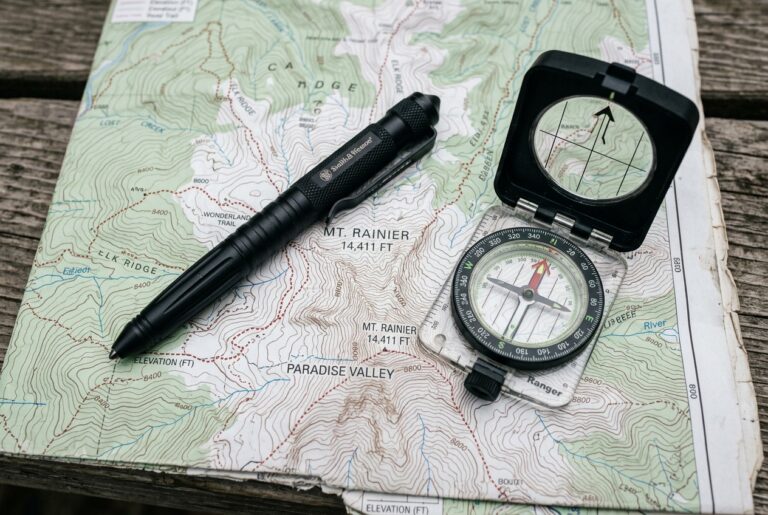
GPS units offer navigation backup when trail markers disappear or weather creates visibility problems. However, electronic devices can fail, making traditional compass and map skills essential backup capabilities.
Night Vision Optics: Maintaining Stealth and Awareness
When operating in wilderness areas where unexplained disappearances occur, maintaining situational awareness during nighttime hours becomes critical for personal security. Night vision technology offers significant advantages over traditional flashlights, particularly when stealth and observation are priorities.
Unlike flashlights that announce your presence to both wildlife and potential threats, night vision devices allow you to see without being noticed. This capability proves invaluable when assessing suspicious activity around your campsite or monitoring approaches during overnight wilderness stays. The ability to observe your environment without compromising your position provides a tactical advantage that standard illumination cannot match.
Quality night vision equipment is increasingly accessible through online retailers like Amazon, where established brands offer proven technology for civilian use. Professional-grade devices provide superior image quality and range but come with corresponding price points that may exceed recreational budgets.
For budget-conscious outdoor enthusiasts, reliable entry-level options include the Dark Force NVB series and Raven Monoculars. These affordable alternatives provide basic night vision capability without the premium costs associated with military-grade equipment. While they may lack the range and clarity of professional systems, budget night vision devices offer substantial improvement over naked-eye visibility during low-light conditions.
The tactical advantage of night vision extends beyond personal security to practical wilderness applications. Spotting wildlife movement, identifying terrain features, and maintaining navigation capability during darkness all benefit from enhanced vision technology. In situations where mysterious disappearances have occurred, the ability to maintain comprehensive awareness throughout nighttime hours adds an important defensive layer.
When selecting night vision equipment, consider factors like battery life, durability, and weather resistance alongside optical performance. Wilderness environments demand equipment that functions reliably under harsh conditions, making build quality as important as image clarity for survival applications.
Essential Survival Gear
Basic survival equipment can mean the difference between temporary inconvenience and permanent disappearance. Quality knives provide tools for shelter construction, food preparation, and self-defense. Fire-starting equipment enables warmth, signaling, and psychological comfort during emergency situations.
Bivouac shelters offer emergency protection from exposure when weather conditions deteriorate rapidly. Lightweight emergency shelters weigh minimal amounts while providing life-saving protection during unexpected overnight situations.
Redundancy in critical systems prevents single-point failures that could prove fatal. Carry backup fire-starting methods, multiple navigation tools, and extra food beyond planned requirements.
The Broader Implications for Outdoor Recreation
Missing 411 cases represent more than statistical curiosities or fodder for conspiracy theories. They remind us that wilderness areas retain elements of danger and mystery that modern technology and preparation cannot completely eliminate. In 2022, the National Park Service reported an estimated 312 million recreational visits to the parks it manages, with over 13 million people staying overnight.
The vast majority of these visitors return home safely with positive experiences and renewed appreciation for natural environments. However, the existence of unexplained disappearances should encourage all outdoor enthusiasts to approach wilderness travel with appropriate respect and preparation.
Whether these cases result from conventional crimes, natural hazards, or phenomena beyond current understanding, the practical response remains consistent: prepare thoroughly, travel responsibly, and maintain vigilance in remote areas. The wilderness demands respect from all who enter its domain.
Park Rangers, search and rescue professionals, and law enforcement agencies work tirelessly to solve these cases and prevent future disappearances. Supporting their efforts through cooperation, preparation, and responsible outdoor practices benefits the entire outdoor community.
The Continuing Search for Answers
David Paulides has written twelve books about missing people in National parks, forests, and open spaces in sixteen countries. His work has expanded beyond North America to document similar patterns worldwide, suggesting that these phenomena transcend geographic and cultural boundaries.
The CanAm Missing Project continues investigating these cases, providing resources for families and researchers seeking answers. After reviewing thousands of SAR reports and speaking with countless victims’ families, we believe this approach needs a fundamental shift.
Statistical analysis by skeptics like Kyle Polich, a data scientist and host of the Data Skeptic podcast, documented his analysis of Paulides’ claims and concluded that “I’ve exhausted my exploration for anything genuinely unusual. After careful review, to me, not a single case stands out nor do the frequencies involved seem outside of expectations.”
This scientific scrutiny provides important balance to sensationalized theories while acknowledging that individual cases may still contain genuinely puzzling elements. The debate between believers and skeptics continues, with both sides contributing valuable perspectives to our understanding of these complex phenomena.
Embracing the Mystery While Staying Safe
The Missing 411 cases remind us that our natural world retains elements of mystery that may never be fully explained. Rather than avoiding wilderness experiences out of fear, outdoor enthusiasts should embrace these uncertainties while taking appropriate precautions.
The wilderness offers profound rewards for those who approach it with respect, preparation, and humility. These missing person cases, regardless of their ultimate explanations, serve as reminders that nature operates by rules we don’t always understand.
Every venture into wild spaces carries inherent risks balanced against immeasurable benefits. Understanding the Missing 411 phenomenon adds another layer to our risk assessment without necessarily changing our fundamental approach to outdoor recreation.
The mystery continues. The wilderness calls. And those who answer that call responsibly will continue finding renewal, challenge, and perspective in America’s greatest natural treasures while honoring the memory of those who ventured forth and never returned.
About the Author