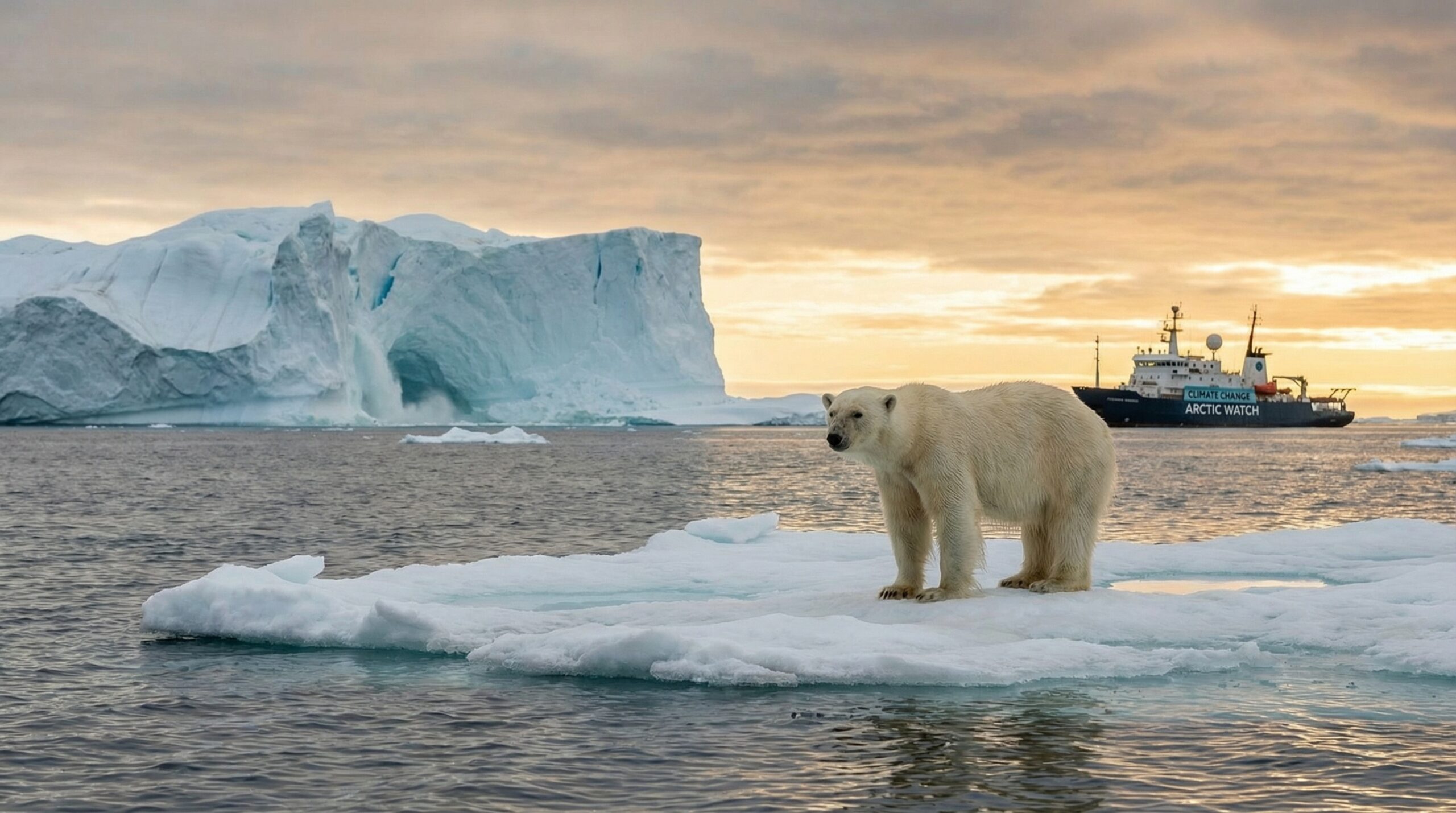
The Arctic is warming nearly four times faster than the rest of the planet. This dramatic change threatens one of nature’s most recognizable predators, the polar bear. Understanding the link between polar bears and climate change is not only about saving one species; it’s also about protecting the whole ecosystem. This article looks at the science behind declining populations, the behaviors that help bears survive, and what the future may look like for these magnificent animals as their icy habitat disappears.
What Makes Polar Bears So Vulnerable to Climate Change?
The polar bear evolved for life in the Arctic. Their scientific name, Ursus maritimus, means “sea bear.” They rely almost completely on sea ice to hunt seals, which are their main food source. Without this frozen platform, polar bears cannot reach the prey that keeps them alive.
Sea ice extent has dropped significantly since 1979 in every month of the year. The Arctic Ocean keeps reaching record-high temperatures. These changes affect polar bear habitat in all 19 recognized subpopulations. The warming Arctic causes a chain reaction: less ice leads to fewer hunting opportunities. This results in malnourished bears and lower cub survival rates. The threat to polar bears is not just a possibility; it is happening now.
Parts of the Arctic that used to have year-round ice coverage now see complete melts in summer. This forces polar bears to spend more time on land during important feeding times. While polar bears can swim well, swimming takes much more energy than walking on ice. Longer distances between ice floes drain their fat reserves more quickly, adding extra stress to populations that are already struggling.
How Many Polar Bears Are Left in the Wild?
The International Union for Conservation of Nature (IUCN) estimates approximately 26,000 polar bears remain worldwide. The global population of polar bears spans five nations: Canada, the United States (Alaska), Russia, Greenland, and Norway. About 60% of polar bears live within or share territories with Canada.
Population assessments reveal troubling trends. Three subpopulations show confirmed declines while many others lack sufficient data. The Southern Beaufort Sea population plunged by roughly 40% between 2001 and 2010. Western Hudson Bay bears dropped 27% in just five years, from 842 bears in 2016 to 618 in 2021. These aren’t minor fluctuations—they represent population crashes within single decades.
The polar bear population faces severe challenges ahead. Scientists project that two-thirds of polar bears could disappear by 2050 if current warming trends continue. Some populations may vanish entirely by the 2030s. The IUCN classifies polar bears as vulnerable, meaning they face a high risk of extinction in the wild. However, determining exact numbers remains difficult due to the remote Arctic habitat where polar bears live.
Why Is Sea Ice Loss So Devastating for Polar Bear Survival?
Polar bears rely on sea ice for virtually every critical life function. They hunt seals at breathing holes in the ice. They mate and breed on sea ice platforms. They rest and conserve energy on stable ice formations. The sea ice habitat provides everything polar bears need to thrive.
Rising temperatures cause sea ice to break up earlier each spring and form later each autumn. This shrinking window devastates polar bear hunting success. Bears typically gain two-thirds of their annual energy during late spring and early summer when ringed seal pups are abundant. Earlier ice breakup cuts this crucial feeding period short. Bears must then fast for extended periods with inadequate fat reserves.
Ice loss manifests differently across the Arctic. The Southern Beaufort Sea once provided year-round ice coverage but now sees ice retreating far from shore each summer. Hudson Bay experiences complete summer melts, forcing bears onto land for months. Even areas with thick multiyear ice show concerning changes. The Arctic ice area shrinks annually, and this ice loss directly correlates with declining polar bear body condition and survival rates.
Breakthrough 2024 Study Directly Links Sea Ice Loss to Population Decline
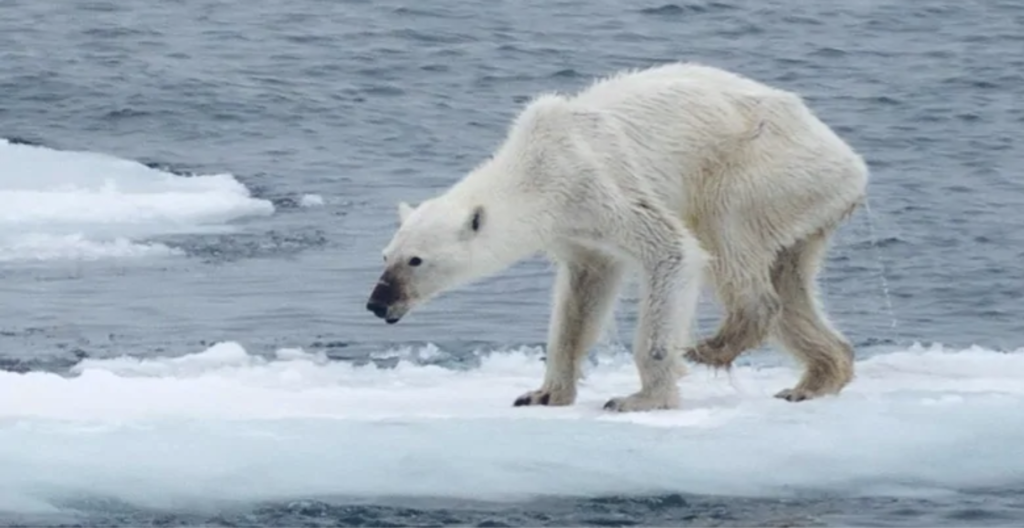
A landmark study published in Science journal in December 2024 provides definitive evidence connecting climate change to polar bear population crashes. Researchers at the University of Toronto developed a bio-energetic model that tracks how individual polar bears acquire and use energy throughout their entire lifecycle—from cub to adulthood.
Lead author Louise Archer and her team compared their model predictions against four decades of monitoring data from Western Hudson Bay polar bears between 1979 and 2021. The model matched the observed population decline with remarkable accuracy. This wasn’t just correlation—the research established a clear mechanistic pathway showing exactly how sea ice loss drives population collapse.
The findings are stark. Polar bears rely on sea ice to hunt ringed seals during a critical spring feeding period when they gain most of their annual energy reserves. As Arctic temperatures rise, ice breaks up earlier each spring and forms later each fall. This shorter hunting season means polar bears cannot consume enough seal blubber to sustain themselves through longer fasting periods on land.
The energy deficit shows up in measurable ways. Adult female body mass dropped 39 kilograms over 37 years. One-year-old cubs lost 26 kilograms during the same period. These aren’t minor variations—they represent bears struggling to meet basic metabolic needs. Insufficient energy reserves prevent females from successfully reproducing. Cubs that are born smaller have lower survival rates. The population enters a demographic death spiral.
Western Hudson Bay serves as a bellwether for global polar bear populations. This is one of the southernmost and best-studied populations. The region has experienced nearly 50% population decline since the 1980s. Researchers emphasize this trajectory will spread to other populations as Arctic warming continues. Co-author Péter Molnár, an expert on climate impacts to large mammals, stated: “There’s every reason to believe what is happening to polar bears in this region will also happen to polar bears in other regions, based on projected sea ice loss trajectories.”
The study addresses common objections from climate change skeptics. Some argue that hunting, not habitat loss, drives polar bear declines. However, harvest rates in Western Hudson Bay remain regulated and stable. The decline specifically affects juveniles and adult females—the reproductive core of the population. Adult males, who can survive longer fasting periods, show more stable numbers. This demographic pattern points directly to food scarcity, not overharvesting.
Others point to population increases in certain regions as evidence against climate impacts. The research team notes these increases occur in areas transitioning from thick multiyear ice to seasonal ice—a temporary improvement in hunting conditions. Kane Basin and M’Clintock Channel show this pattern. But these gains represent transient phenomena. As warming continues, these regions will eventually lose ice coverage entirely, following the same trajectory as Western Hudson Bay.
The 2024 Science publication carries significant weight in the scientific community. Science maintains rigorous peer-review standards and publishes only groundbreaking research. This study underwent extensive scrutiny before publication. The mechanistic approach—tracking energy budgets rather than simply counting bears—provides the kind of causal evidence that settles scientific debates.
Most importantly, the model accurately predicts what researchers observe in the field. Theory matches reality. When scientists can predict population outcomes based on environmental inputs, they’ve identified the actual cause. The Western Hudson Bay population demonstrates precisely what the bio-energetic model forecasts: fewer cubs born, smaller bears, declining reproduction, accelerating population loss. Climate change isn’t a contributing factor—it’s the primary driver pushing these polar bears toward extinction.
Can Polar Bears Adapt to a Changing Climate?
Recent genetic research offers a cautious glimmer of hope. A University of East Anglia study published in 2025 revealed that polar bears in northeastern and southeastern Greenland show genetic changes linked to their environment. Blood samples from polar bears demonstrated that genes linked to heat stress, aging, and metabolism behaved differently in warmer southern populations. This represents the first documented case of rising temperatures driving genetic changes in a mammal.
Polar bear DNA appears to be rewriting itself in response to climate pressure. These genetic changes may help some populations cope with warmer conditions temporarily. However, researchers emphasize this doesn’t reduce extinction risk. The ability to adapt to changes in their habitat has limits. Adaptation takes generations, but climate change accelerates faster than evolution can respond.
Some adaptive behaviors have emerged. Bears in northeastern and southeastern Greenland developed unique hunting strategies using glacier ice fragments. Other populations increasingly scavenge whale carcasses, consume bird eggs, or hunt reindeer on land. Yet these alternative food sources cannot replace the high-fat seal diet that polar bears require. A 2024 study concluded that terrestrial foods fail to provide adequate nutrition during ice-free periods, particularly for younger bears living in compromised habitats.
What Happens When Polar Bears Are Forced to Spend More Time on Land?
As sea ice disappears, polar bears spend increasingly longer periods ashore. This behavioral shift creates multiple problems. On land, bears cannot access their primary prey—seals. Instead, they rely on stored fat reserves that must last through extended fasting periods. Cubs particularly struggle during these lean times, as they have smaller fat reserves than adults.
Extended land stays also increase conflicts between polar bears and humans. Hungry bears venture into communities searching for food in garbage dumps and human settlements. Churchill, Manitoba operates a “polar bear jail” where nuisance bears are detained until sea ice reforms. These human-wildlife interactions have intensified as warming forces more bears onto land for longer durations.
The den provides critical protection for pregnant females and their cubs during winter. However, changing conditions threaten denning habitat stability. Warmer temperatures can cause den collapse, killing vulnerable cubs. Thawing permafrost makes underground dens less secure. Female polar bears in the European Arctic now have only one-third the denning habitat available compared to the 1980s. These compounding stresses reduce cub survival rates and impact population recovery.
How Do Greenhouse Gas Emissions Impact Polar Bears and Their Prey?
Greenhouse gas emissions drive Arctic warming at an unprecedented rate. Carbon dioxide and methane trap heat in the atmosphere, causing polar regions to warm faster than equatorial areas. This accelerated warming directly threatens polar bears and their habitat.
The impacts of climate change ripple through the entire Arctic food chain. Warmer ocean temperatures affect ringed seal populations—the polar bear’s main food source. Seals need stable ice for breeding and raising pups. Ice instability reduces seal numbers and makes them harder for bears to catch. This creates a nutrition crisis for polar bears at both ends: less time to hunt and fewer seals available when they do.
Scientists have identified specific emission pathways and their consequences. Under high greenhouse gas emission scenarios, reproduction and survival rates will decline steeply across most subpopulations by 2100. Only a few high-Arctic populations might persist. Moderate emission reductions could extend polar bear survival but likely won’t prevent some localized extinctions this century. The only way to reduce our greenhouse gas emissions effectively would give polar bears their best chance.
Are All Polar Bear Populations Declining at the Same Rate?
No. The 19 polar bear subpopulations face different rates of change depending on their specific sea ice conditions. Scientists group these populations into four distinct ecoregions: seasonal, divergent, convergent, and archipelago. Each experiences unique ice dynamics that affect local bears differently.
Seasonal regions like Hudson Bay see complete summer ice melt. Bears must come ashore and fast until freeze-up. Western Hudson Bay and Southern Hudson Bay populations have shown significant declines. Divergent regions historically had year-round ice but now see ice retreating farther from shore. The Southern Beaufort Sea exemplifies this pattern with documented population crashes.
Some northern populations show temporary stability or even slight increases. Kane Basin and M’Clintock Channel populations have grown recently. This occurs because thick multiyear ice is transitioning to seasonal ice, temporarily improving hunting conditions. However, this represents a transient phenomenon. As warming continues, these areas will eventually lose ice coverage entirely. The global community must recognize that short-term stability in some regions doesn’t negate the overall threat polar bears face.
What Role Do Conservation Efforts Play in Protecting Polar Bears?
International cooperation provides some protection for polar bears. The 1973 Agreement on the Conservation of Polar Bears united all five polar bear nations. This treaty banned most commercial hunting, allowed limited indigenous hunting using traditional methods, and promoted habitat preservation. WWF and other organizations work to raise awareness and fund research programs.
The United States listed polar bears as threatened under the Endangered Species Act in 2008. Canada designated them as “special concern” in 1991. These legal protections help regulate hunting and industrial activities in polar bear range. Oil and gas exploration faces restrictions in critical habitats, particularly around denning areas and seasonal feeding grounds.
However, conservation efforts cannot stop sea ice from melting. The Polar Bear Specialist Group acknowledges that climate change remains the primary threat—one that traditional conservation cannot address. A 2015 Circumpolar Action Plan established collaborative objectives between nations, but its 2020 review emphasized that reducing carbon emissions remains essential. Conservation provides breathing room, but only emission reductions can truly secure polar bear futures.
How Does Climate Change Affect Polar Bear Cubs and Reproduction?
Female polar bears typically give birth to two cubs in winter dens. These tiny, vulnerable cubs depend entirely on their mother’s body condition. A well-fed mother produces rich milk that fuels rapid cub growth. Poor maternal condition leads to smaller litters, underweight cubs, and higher mortality rates.
Extended ice-free periods directly impact reproduction. Mothers need adequate fat reserves to sustain pregnancy, lactation, and cub rearing. When hunting seasons shorten, females enter dens with insufficient reserves. Studies show that longer summer fasting periods result in smaller litter sizes and reduced cub survival. One cub may survive when twins would have in better conditions.
Young polar bears face extreme vulnerability to changing conditions. Cubs can survive approximately 117 days without food, while adults tolerate longer fasting periods. As ice-free seasons extend beyond this threshold, cub mortality increases dramatically. Scientists project that impacts on cub recruitment will appear decades before adult survival rates decline. This means population declines will accelerate as fewer young bears mature to breeding age.
What Does the Future Hold for Polar Bears in a Warming World?
Future projections paint a sobering picture. Under current emission trajectories, most polar bear subpopulations will disappear by 2100. Computer models analyzing fasting thresholds and ice loss patterns indicate that bears in seasonal regions face impacts first. Hudson Bay populations could experience local extinction by the 2030s.
Even optimistic scenarios present challenges. Moderate emission reductions might preserve some northern populations through 2100, but many southern populations would still vanish. The Canadian Archipelago and northern Greenland might serve as final refuges, assuming sufficient prey remains available. These remnant populations would represent only a fraction of current numbers.
Hope exists in immediate action. Every tenth of a degree of warming prevented extends survival time for vulnerable populations. Rapid emission reductions could maintain ice coverage in critical habitats longer, giving bears time to adapt. The window for meaningful intervention narrows each year. Polar bears might survive if humanity acts decisively on climate change. Delay ensures their extinction.
The Path Forward: Understanding What’s at Stake
Polar bears serve as both icons and indicators of Arctic health. Their struggle reflects broader ecosystem collapse accelerating across polar regions. When polar bears disappear, entire food webs unravel. The Arctic Ocean loses its apex predator. Seal populations may initially grow unchecked, then crash as their own prey bases shift.
Indigenous communities who have coexisted with polar bears for millennia face cultural losses alongside ecological ones. These bears hold deep spiritual and practical significance for Arctic peoples. Their extinction would sever ancient connections between humans and polar bears that have shaped northern cultures for thousands of years.
The choice remains ours. Polar bears evolved over hundreds of thousands of years to master one of Earth’s harshest environments. They survived ice ages and interglacial periods. Yet they cannot survive the rapid changes humans have triggered in mere decades. Protecting polar bears requires honest acknowledgment of anthropogenic climate change and commitment to aggressive emission reductions. The melting Arctic doesn’t just threaten polar bears—it warns of disruptions affecting every ecosystem worldwide. Saving polar bears means confronting the climate crisis with the urgency it demands.
Key Takeaways
- Approximately 26,000 polar bears remain globally, with the IUCN classifying them as vulnerable to extinction
- Arctic temperatures rise nearly four times faster than the global average, directly threatening sea ice habitat that polar bears require for hunting and survival
- Three confirmed populations are declining, including the Southern Beaufort Sea (40% decline 2001-2010) and Western Hudson Bay (27% decline 2016-2021)
- Sea ice loss forces bears to fast longer, swim greater distances, and spend more time on land where food is scarce
- Genetic research shows polar bears in Greenland are adapting at the DNA level, but this won’t prevent extinction without emission reductions
- Cubs face higher mortality as extended ice-free periods exceed their 117-day fasting capacity
- Under high emission scenarios, two-thirds of polar bears could disappear by 2050, with most populations gone by 2100
- Conservation efforts help but cannot replace the need to reduce greenhouse gas emissions and slow Arctic warming
- Conflicts between polar bears and humans increase as bears search for alternative food sources near communities
- Moderate emission reductions could extend polar bear survival and prevent some population extinctions this century
About the Author