Cold temperatures kill. Every year, unprepared hikers and stranded motorists face life-threatening situations that proper gear could have prevented. This comprehensive winter camping checklist covers everything you need for outdoor adventures and vehicle emergencies. Whether you’re planning a winter hike through snowy terrain or simply want peace of mind during your daily commute, this guide delivers practical, field-tested recommendations.
You’ll learn exactly what gear you need to stay warm, signal for help, and survive unexpected situations. No fluff. No generic advice. Just the essential gear that experienced winter hikers and emergency responders actually recommend.
The Tragic Death of Storm De Beul in Lapland
The great outdoors offer freedom, challenge, and real adventure; but they are never to be underestimated. A recent and tragic example is the solo expedition of a young survival enthusiast who was caught in a sudden snowstorm in the remote wilderness of Swedish Lapland. Extreme winds, plunging temperatures, and isolation quickly turned a planned survival challenge into a fatal emergency. Even with experience and determination, the conditions proved overwhelming, underscoring how fast winter environments can escalate when preparation falls short or margins disappear.
Why Is a Winter Emergency Kit Different From a Standard Survival Kit?
Standard emergency kits assume moderate conditions. Winter demands more. Cold conditions drain batteries faster, freeze water supplies, and turn minor inconveniences into dangerous situations. Your body loses heat 25 times faster in wet clothing than dry. Hypothermia prevention becomes the primary concern once temperatures drop below freezing.
A proper cold weather survival kit addresses three critical needs: maintaining body heat, staying hydrated, and signaling for rescue. The ten essentials form your foundation, but winter wilderness travel requires additional specialized equipment. You need gear that functions in extremely cold weather conditions. Zippers must work with gloves. Flashlights must survive subzero temperatures. Food must provide calories without requiring preparation.
Your winter car emergency kit faces different challenges than your backpacking trip setup. Vehicle kits can include heavier items since weight doesn’t matter. Backcountry winter gear must balance warmth against portability. Both require careful planning.
What Layering System Works Best for Cold Weather Preparedness?
Layering is the most critical concept in winter hiking gear. Three layers work together to regulate temperature and manage moisture. Get this wrong, and you’ll either overheat and sweat or freeze from inadequate insulation. The base layer sits against your skin. It must wick moisture away from your body. Synthetic materials or merino wool work best. Cotton kills in winter conditions—it absorbs sweat and stays wet.
Your insulating layer traps warm air. Fleece jackets or down vests provide excellent insulation while remaining compressible. Pack an extra layer in your kit. Conditions change rapidly in the backcountry. What feels comfortable at the trailhead may leave you shivering on an exposed ridge. A lightweight fleece adds minimal weight but provides significant extra warmth when weather conditions deteriorate.
The outer layer blocks wind and precipitation. Waterproof shells protect your insulation from snow and rain. Without this protection, wet insulation loses its ability to retain body heat. Your camping checklist should include a backup waterproof layer. Stormy weather can appear without warning in winter wilderness areas.
How Do You Keep Your Feet Warm During a Winter Day Hiking Trip?
Cold feet end trips early. Worse, they can lead to frostbite. Your hiking boot choice matters enormously. Insulated winter boots with waterproof membranes protect against snow and slush. A quality pair of winter boots should fit slightly loose—tight boots restrict circulation and actually make feet colder.
Winter socks deserve serious attention. Moisture-wicking synthetic or wool blends keep your feet dry. Always carry spare socks in your pack. Wet socks against cold skin accelerate heat loss dramatically. Experienced winter hikers change socks midday even when their current pair feels dry.
Gaiters seal the gap between your pants and boots. They prevent snow from entering your footwear. Vapor barrier liners can help in extremely cold conditions by preventing sweat from reaching your insulation. To keep your feet comfortable on longer outings, consider chemical toe warmers as backup.
What Safety Gear Belongs in Every Winter Adventure Pack?
Navigation equipment tops the safety gear list. A map and compass work when GPS batteries die. Winter storms reduce visibility to feet. You cannot rely on trail markers buried under snow. Know how to use these tools before you need them.
Your first aid kit requires winter-specific additions. Include hand warmers, blister treatment, and materials for treating hypothermia. A first aid kit should contain an emergency bivvy or space blanket. These lightweight items can save your life if you’re forced to spend an unplanned night outdoors.
A headlamp is non-negotiable. Winter days are short. What started as a winter day hiking trip can become a nighttime survival situation if you misjudge distances. Pack extra batteries and keep them warm inside your jacket. Cold temperatures dramatically reduce battery life. Some headlamp models allow you to run the battery pack inside your clothing.
Fire-starting equipment must work in wet conditions. Waterproof matches and a ferrocerium rod provide redundancy. Cotton balls soaked in petroleum jelly make excellent tinder that ignites even when damp. Practice starting fires in your backyard before depending on these skills in an emergency.
Do You Need Snowshoes or Skis for Backcountry Winter Travel?
Flotation equipment becomes essential when snow accumulates beyond ankle depth. Without snowshoes or skis, each step becomes exhausting as you posthole through the snowpack. Your energy expenditure increases dramatically. A trip that takes two hours in summer might take six hours through deep snow.
Snowshoe selection depends on your weight and the terrain you’ll encounter. Larger frames provide more flotation in powder. Smaller frames offer better maneuverability in dense forest. Most recreational winter hikers find moderate-sized snowshoes with aggressive crampons adequate for varied terrain.
Poles dramatically improve stability and reduce fatigue. They help you maintain balance on uneven terrain and provide support during descents. Adjustable poles allow you to lengthen them for downhill sections and shorten them for climbs. Powder baskets prevent poles from sinking deep into soft snow.
What Winter Camping Gear Ensures a Safe and Enjoyable Winter Camping Experience?
Winter camping requires specialized sleeping gear. A sleeping bag and tent rated for temperatures below your expected lows provide essential protection. Your bag should be rated at least 10 degrees colder than anticipated conditions. Down insulation offers excellent warmth-to-weight ratios but loses effectiveness when wet. Synthetic fills maintain insulation properties even in damp conditions.
Insulation from the cold ground prevents heat loss. A foam pad or inflatable mattress creates a barrier between you and frozen earth. The R-value measures insulating effectiveness—higher numbers mean better insulation. Winter camping essential practice includes using two pads stacked for maximum protection from ground chill.
Four-season tents withstand heavy snow loads and fierce winds. They feature stronger poles and reinforced guy-out points. Vestibules provide space to store wet gear outside your sleeping area. This helps you stay dry inside. Condensation management matters in enclosed shelters. Proper ventilation prevents moisture buildup that can soak your gear overnight.
How Do You Stay Hydrated When Water Sources Freeze?
Dehydration remains a serious concern in cold winter conditions. You lose water through respiration and perspiration even when you don’t feel thirsty. Cold air suppresses thirst signals. Many winter hikers become significantly dehydrated without realizing it.
Insulated water bottles prevent freezing. Store bottles upside down—ice forms at the top first, which would be the bottom if inverted. This keeps the drinking spout clear. Wide-mouth bottles freeze slower than narrow openings. Hydration bladder hoses freeze quickly in cold temperatures. Blow water back into the reservoir after each sip.
Hot drinks provide both hydration and warmth. Thermos containers maintain temperature for hours. Preparing hot water before bed gives you a warm drink in the morning and can heat your sleeping bag. A component of your winter camping gear should include a reliable stove system that works in cold weather.
What Should Your Winter Car Emergency Kit Include?
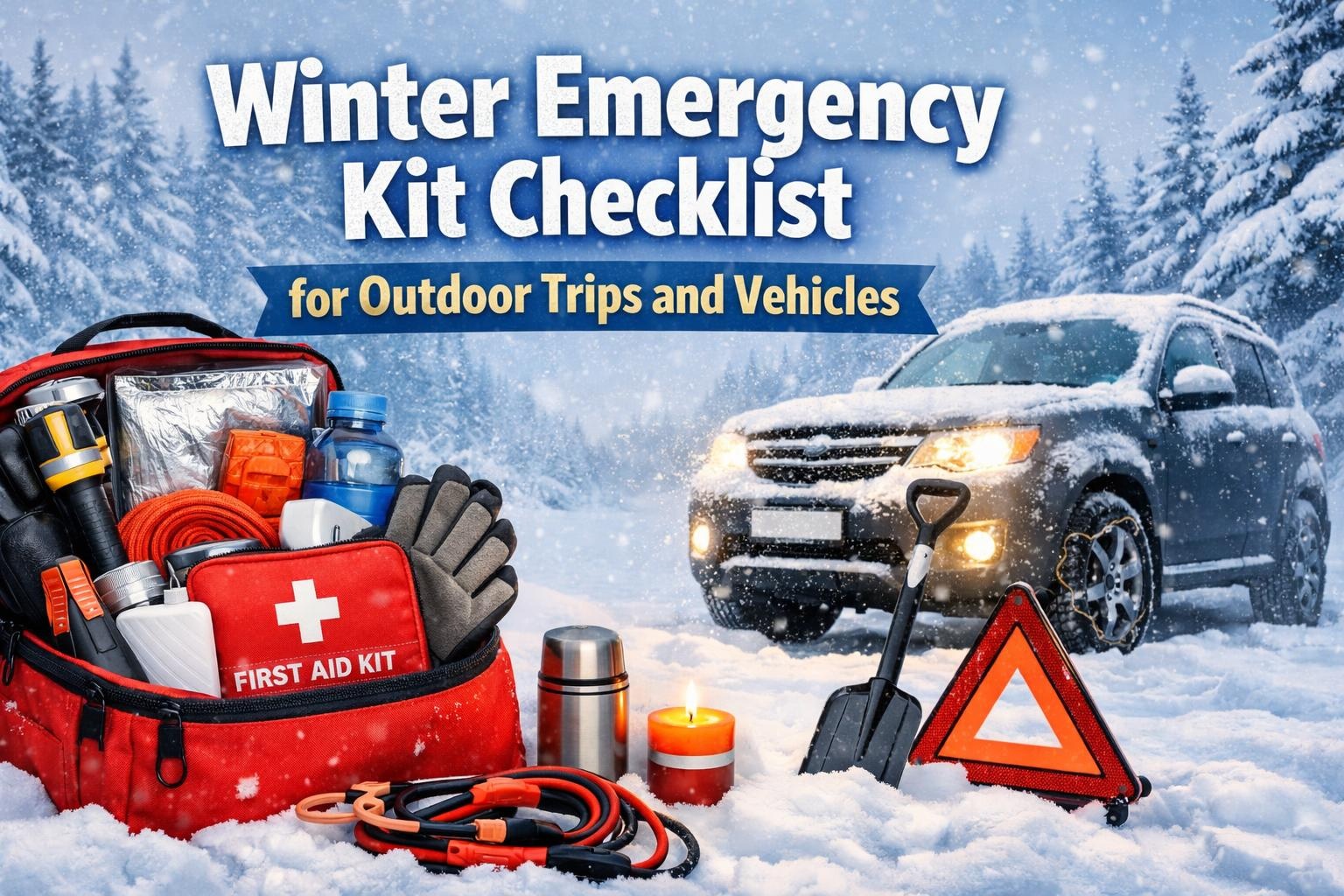
Vehicle emergencies present unique challenges. You may be stranded far from help in freezing conditions. Your winter car emergency kit must sustain you until rescue arrives. Start with warmth: blankets, sleeping bags, and extra clothing can mean the difference between discomfort and hypothermia.
Traction aids help you get moving again. Sand, kitty litter, or commercial traction mats provide grip on ice. A small shovel lets you dig out from snowbanks. Folding models store compactly in your trunk. Jumper cables or a portable battery pack address dead batteries—a common winter problem.
Signaling equipment makes your vehicle visible. Road flares, reflective triangles, and bright flags alert other drivers and search teams to your location. A fully charged cell phone with a car charger maintains communication. Consider a portable power bank as backup.
Food and water sustain you while waiting. High-calorie, non-perishable items like energy bars and nuts provide quick energy. Water bottles may freeze—keep some inside the passenger compartment where body heat and vehicle warmth slow freezing. Include a winter hat, gloves, and a neck gaiter even if you never plan to leave your vehicle. Outdoor adventure can happen unexpectedly when you need to seek help.
How Do REI Expert Advice and the Ten Essentials Apply to Winter Conditions?
The ten essentials system, popularized by outdoor retailers and rescue organizations, forms the foundation of safe wilderness travel. This packing list includes the ten essentials: navigation, sun protection, insulation, illumination, first aid supplies, fire starting, repair tools, nutrition, hydration, and emergency shelter. Winter demands expanded versions of each category.
Navigation requires redundant systems. Electronic devices fail in cold. Paper maps and compass skills become primary tools. Sun protection matters more in winter—snow reflects UV radiation intensely. Sunglasses or goggles prevent snow blindness. Sunscreen protects exposed skin even on overcast days.
Emergency shelter needs expand significantly. A lightweight bivy or space blanket might suffice in summer. Winter requires gear to make shelter that protects against wind and insulates from cold ground. Part of the ten essentials philosophy involves preparing for worst-case scenarios. If new to winter backcountry travel, start with shorter trips closer to help.
What’s the Best Way to Prepare for Winter Without Breaking the Budget?
Quality gear represents an investment in safety. However, preparing for winter doesn’t require unlimited funds. Prioritize items that directly affect survival: insulation, waterproof protection, and reliable fire starting. These items justify higher spending. Other gear can be assembled gradually.
Layering systems allow flexibility. A good base layer, versatile fleece, and waterproof shell handle most conditions. You can add specialized pieces over time. Used gear from reputable sources offers savings. Inspect zippers, seams, and waterproof coatings carefully. A comprehensive winter camping checklist helps you identify gaps in your existing equipment.
DIY solutions work for some items. Homemade fire starters cost pennies. Duct tape wrapped around a water bottle serves multiple repair purposes. However, never compromise on critical safety gear. Cheap headlamps fail when you need them most. Bargain sleeping bags may leave you cold in a winter wonderland that turns dangerous after dark.
Your Quick-Reference Gear Checklist to Make Sure You’re Ready
Use this checklist to make sure your winter emergency kit is complete. Enjoyment of your winter camping or outdoor experience depends on proper preparation. The right gear transforms a potentially dangerous situation into a manageable challenge.
Layering and Warmth:
- Moisture-wicking base layer (synthetic or wool)
- Insulating mid-layer (fleece or down)
- Waterproof outer layer
- Winter hat, gloves, and neck gaiter
- Extra layer for emergency warmth
Hiking Essentials:
- Insulated winter boots with traction
- Snowshoes or skis for deep snow
- Adjustable poles with powder baskets
- Gaiters to keep snow out of boots
Safety and Navigation:
- Headlamp with extra batteries (kept warm)
- Map and compass plus GPS backup
- First aid kit with winter additions
- Fire starting materials (waterproof)
- Emergency shelter (bivy or space blanket)
Camping Gear:
- Cold-rated sleeping bag and tent
- High R-value sleeping pad
- Insulated water bottles
- Cold-weather stove and fuel
Vehicle Kit Additions:
- Blankets or sleeping bag
- Traction aids (sand, kitty litter)
- Folding shovel
- Jumper cables or battery pack
- Road flares and reflective triangles
- Non-perishable food and water
- Fully charged phone with car charger
Winter outdoor experience rewards those who prepare. The backcountry winter environment offers unmatched beauty and solitude. With the right gear list and knowledge, you can explore safely through colder temperatures while minimizing risk. Take time to practice with your equipment before heading into remote areas. Your winter excursions will be more enjoyable when you trust your gear to keep you warm and safe.
About the Author