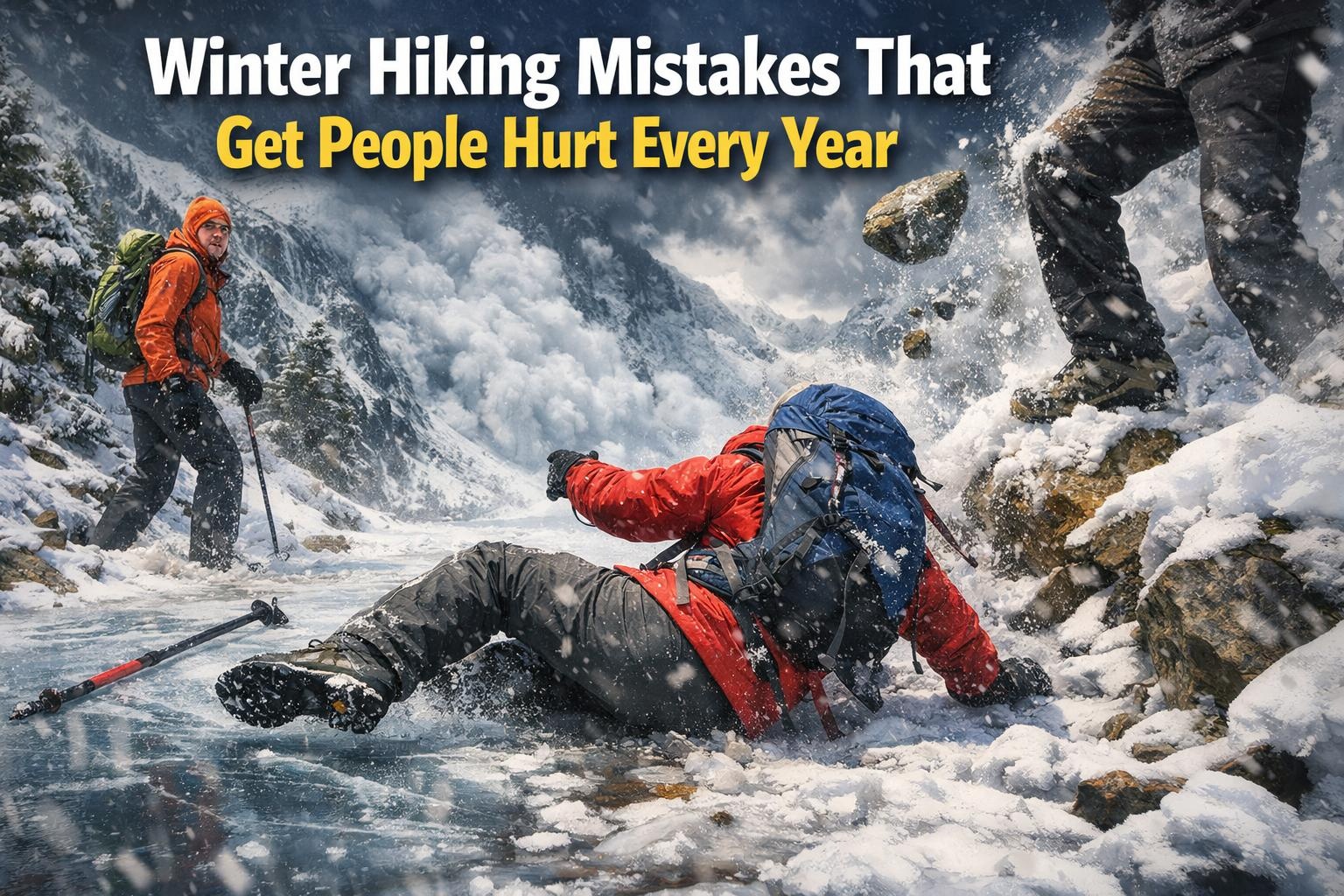
Search and rescue teams respond to preventable emergencies every winter. Many hikers who get hurt made the same mistakes; errors that seem minor until cold temperatures turn them dangerous. This guide covers the biggest hiking mistakes that lead to winter hiking injuries, hypothermia, and worse.
You’ll learn about the common mistakes hikers make on winter trails and how to avoid them. These are not just theoretical warnings. They are lessons from people who have hiked in real backcountry conditions and learned the hard way. Whether you’re new to winter hiking or have years of experience, these tips could save your life.
Why Do So Many Hikers Underestimate Winter Trail Conditions?
Summer hiking builds false confidence. A trail you’ve hiked dozens of times becomes completely different under snow and ice. The familiar path disappears. Landmarks vanish. What took three hours in July might take six in January. Many hikers don’t adjust their expectations.
Winter conditions change rapidly. A sunny morning can become a whiteout by noon. Temperatures drop fast once the sun dips behind ridgelines. The weather forecast from the trailhead might be obsolete two miles in. Always check the weather before leaving home, but understand that mountain weather follows its own rules.
The Appalachian Mountain Club reports that most winter rescues involve hikers who underestimated conditions. They started late. They didn’t bring enough layers. They assumed the hike would feel like summer hiking with colder air. It doesn’t. Steep terrain covered in ice requires different skills entirely. Even experienced hikers should approach their first winter hikes with extra caution.
What Common Hiking Mistakes Lead to Hypothermia?
Hypothermia kills more winter hikers than any other single cause. The common mistake? Getting wet. Once your clothing is soaked—from sweat, snow, or stream crossings—you lose body heat rapidly. Cotton absorbs moisture and holds it against your skin. This is why experienced hikers avoid cotton completely.
Moisture-wicking base layers pull sweat away from your body. They help you stay dry even during strenuous climbs. Wool socks provide insulation even when damp. Your outer layer should be waterproof to block wind and precipitation. This layering system lets you regulate temperature without getting wet.
Another path to hypothermia: pushing through exhaustion. Tired bodies generate less heat. When you’re depleted, your judgment fails too. You make poor decisions about when to turn back. The combination of fatigue and cold creates a dangerous spiral that’s hard to escape once it starts.
Is Your Footwear Actually Ready for Winter Hikes?

Proper footwear matters more in winter than any other season. Regular hiking shoes won’t cut it. They lack insulation. They don’t grip ice. Water seeps through seams that held fine in summer. Many hikers learn this lesson on the trail when it’s too late to change.
Hiking boots designed for winter have insulated linings, waterproof membranes, and aggressive tread patterns. They should fit slightly loose to accommodate thick socks without restricting circulation. Tight footwear actually makes feet colder by limiting blood flow. Test your boots at home before committing to a backcountry hike.
Traction devices transform winter hiking safety. Microspikes or crampons bite into packed snow and ice that would send regular boots sliding. A slip on steep terrain can turn a pleasant hike into a rescue situation. Carry traction even on trails that look clear—conditions change as elevation increases.
Why Does Poor Trip Planning Get Winter Hikers in Trouble?
Winter days are short. Really short. You might have only eight hours of daylight. Subtract time for breaks, slower pace on snow, and route-finding challenges. Suddenly your planned ten-mile hike becomes impossible without a headlamp finish. Late starts cascade into dangerous situations.
Do research on current conditions before every hike. Call ranger stations. Check recent trip reports. Avalanche forecasts exist for good reason. The same trail might be perfectly safe one week and deadly the next. Snow stability changes constantly based on temperature, wind, and recent precipitation.
Always check the weather forecast the morning of your hike—not just the night before. Have backup plans. Know your escape routes. Tell someone your intended route and expected return time. If something goes wrong, this information helps rescuers find you faster. It’s important to be prepared for the worst while hoping for the best.
What Happens When Hikers Don’t Bring Enough Water?
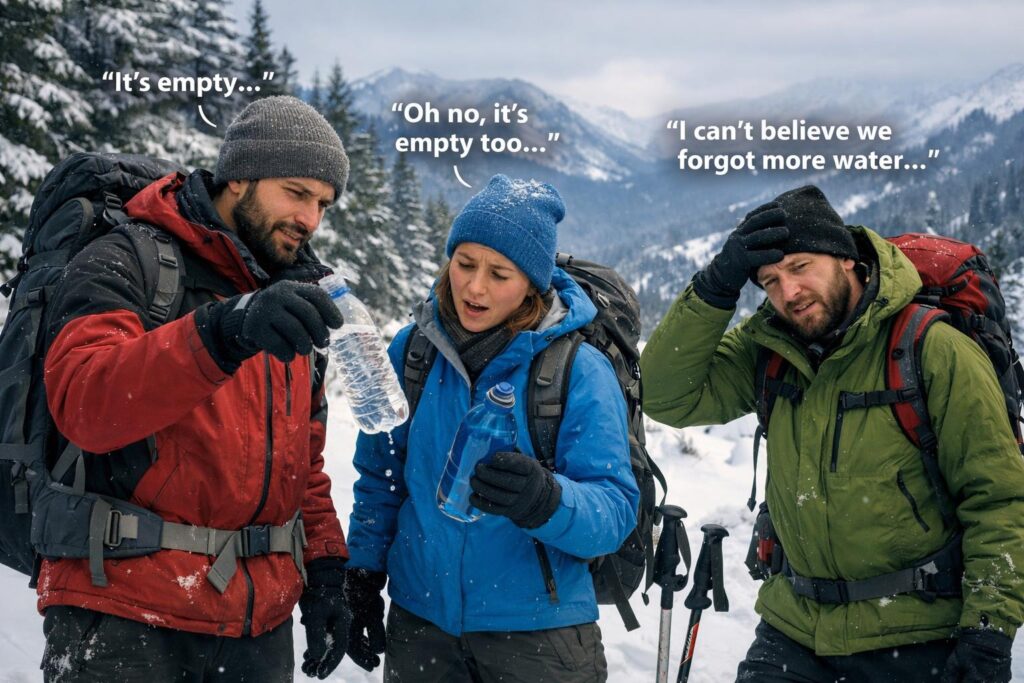
Dehydration sneaks up on winter hikers. Cold air suppresses thirst signals. You don’t feel like drinking because you’re not hot. But your body loses water through respiration and exertion regardless of temperature. By the time you feel thirsty, you’re already dehydrated.
Plan to drink water regularly whether you feel thirsty or not. Three liters of water is a reasonable minimum for a full day of winter hiking. Add electrolyte supplements to replace what you lose through sweat. Dehydration impairs judgment and physical performance—exactly what you can’t afford when conditions are harsh.
Water management creates unique challenges in cold temperatures. If you use a water reservoir, the water inside the hose freezes quickly. Blow air back through after each sip. Or switch to insulated bottles. Never let your water filter freeze—it destroys the hollow fibers permanently. If you carry a water filter, keep it against your body. Stay hydrated to stay safe.
How Does Wrong Clothing Turn a Hike Dangerous?
Layering isn’t optional in winter. It’s survival strategy. The right clothing system lets you add or remove insulation as your activity level changes. Too many layers while climbing means sweat. Too few during breaks means shivering. Both paths lead to problems.
Your base layer should insulate without absorbing moisture. Merino wool and synthetic fabrics work well. Mid-layers provide warmth—fleece jackets or down vests trap body heat effectively. Your outer shell blocks wind and precipitation. Pack extra clothing beyond what you think you’ll need. Weather conditions can shift dramatically mid-hike.
Extremities demand attention. A winter hat prevents massive heat loss through your head. Insulated gloves protect fingers from frostbite. Consider bringing backup pairs—if gloves get wet, frostbite becomes a real risk. Some hikers carry hand warmers as emergency backup. Don’t neglect your neck either. A simple gaiter blocks cold air from sneaking down your collar.
Why Is Navigation Harder When Everything Looks White?
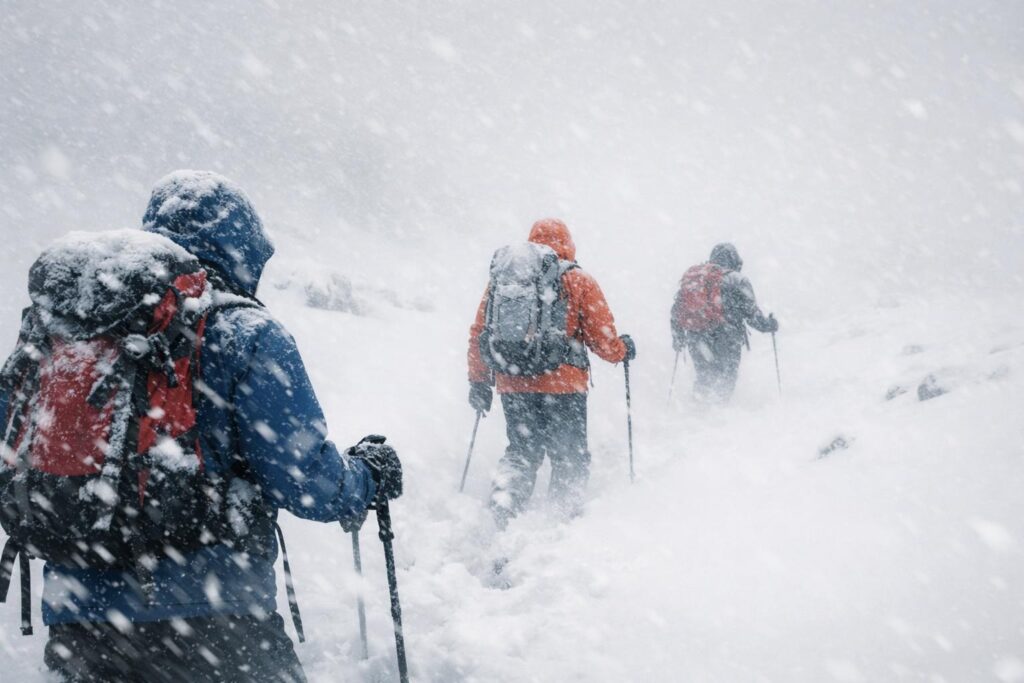
Snow transforms familiar terrain into alien landscapes. Trail markers disappear under drifts. Footprints from previous hikers get covered overnight. The obvious path you remember from October might be completely invisible in February. Every hiker should know how to use a map and compass before attempting winter backcountry travel.
GPS devices help but fail when batteries die. Cold temperatures drain batteries fast. Keep devices warm inside your jacket. Bring extra batteries stored against your body. But never rely solely on electronics. A map and compass work regardless of temperature. Know how to use them before you need them.
Whiteout conditions create the most dangerous navigation challenges. When ground and sky blur together, spatial orientation becomes nearly impossible. Experienced winter hikers avoid these conditions entirely. If caught in deteriorating visibility, stop and wait it out rather than stumbling blindly toward a cliff edge you can’t see.
What Emergency Gear Should Every Winter Hiker Carry?
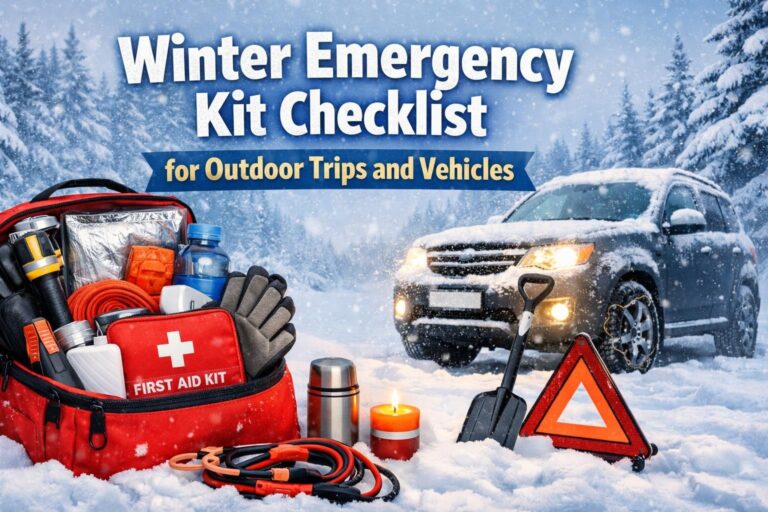
Your backpack should contain emergency shelter even for day hikes. An emergency bivvy weighs ounces but can keep you alive if forced to spend an unexpected night out. Space blankets reflect body heat. Both pack small but provide critical protection when everything goes wrong.
A basic first aid kit addresses common injuries like blister treatment and minor cuts. Add supplies for treating hypothermia—instant heat packs, dry clothing, high-calorie food. First aid training helps you use these supplies effectively. Many outdoor organizations offer wilderness first aid courses specifically designed for backcountry scenarios.
Communication devices let you call for help when self-rescue isn’t possible. Cell coverage fails in most backcountry areas. Satellite messengers work anywhere on earth. They’re expensive but can summon search and rescue teams even from the most remote locations. Some hikers consider them essential; others view them as optional. Weigh the investment against the consequences of being unable to call for help.
How Can You Tell When It’s Time to Turn Around?
Ego kills hikers. The summit doesn’t care about your timeline. Neither does the weather. Turning back before reaching your goal feels like failure, but it’s actually smart decision-making. Every hiker who gets hurt ignored warning signs telling them to retreat.
Set turnaround times before you start hiking. Stick to them regardless of how close you are to the destination. Monitor your pace against your plan. If you’re running behind schedule, the right gear list won’t help if darkness catches you on exposed terrain. Darkness comes fast in winter. A headlamp extends your window but doesn’t eliminate the risks of night hiking.
Watch your group carefully. The weakest member sets the pace. If anyone shows signs of hypothermia—confusion, slurred speech, poor coordination—descend immediately. Warming someone in the field is far harder than preventing cold stress in the first place. Pride has no place on winter trails. The summit will still be there next weekend.
What Mistakes Do Beginner Hikers Make Most Often?
Mistakes beginner hikers make often stem from inexperience with cold weather’s specific demands. They bring the same gear that worked in summer. They don’t appreciate how quickly weather changes. They haven’t developed the judgment to recognize when a situation is deteriorating.
Start with shorter, less remote hikes. Build experience gradually. Learn on trails close to civilization where mistakes are survivable. Hire guides or join organized groups led by experienced winter hikers. The Appalachian Trail and similar popular routes see heavy traffic—you’re more likely to encounter help if needed. Local hiking clubs often organize winter outings perfect for building skills.
Learn from others’ mistakes rather than repeating them. Read trip reports. Talk to rangers. Pay attention to rescue reports in your area. These stories reveal patterns. The same errors appear again and again. Understanding these common mistakes made by others helps you avoid making them yourself. Knowledge gained from others’ suffering is still knowledge worth having.
Stay Smart, Stay Safe: Your Winter Trail Checklist
Winter hiking rewards those who respect it. The quiet beauty of snow-covered wilderness offers experiences unavailable any other time of year. But that beauty comes with real hazards. Use this summary to avoid these common hiking tips violations that lead to trouble.
Before You Leave:
- Always check the weather forecast the morning of your hike
- Do research on current conditions—call ranger stations, read recent reports
- Tell someone your route and expected return time
- Start early to maximize daylight hours
- Set firm turnaround times based on pace and conditions
Gear Essentials:
- Waterproof hiking boots with proper footwear traction
- Layered clothing system with moisture-wicking base layers
- Extra insulation layers beyond what you think you need
- Winter hat, insulated gloves, and neck protection
- Traction devices (microspikes or crampons)
- Headlamp with extra batteries kept warm
- Map and compass—know how to use them
Survival Items:
- Emergency shelter (bivvy or space blanket)
- First aid kit with hypothermia supplies
- Fire-starting materials (waterproof)
- High-calorie food and three liters of water minimum
- Sunscreen for snow reflection
- Communication device for emergencies
On the Trail:
- Drink water regularly even when not thirsty
- Adjust layers before you get wet from sweat
- Monitor your pace against your planned schedule
- Watch group members for signs of cold stress
- Turn back when conditions exceed your experience level
Safe winter hiking means knowing your limits and respecting the environment. The right gear matters. Good judgment matters more. Every outdoor adventure should end with everyone returning home safely. Make that your priority, and the mountains will reward you with experiences worth having.
The way to avoid most winter hiking injuries is surprisingly simple: slow down, prepare thoroughly, and stay humble. Winter demands respect. Give it that respect, and you’ll discover why so many hikers consider snowy trails their favorite season. The solitude, the beauty, the challenge—they’re all waiting for those prepared to meet them safely.
About the Author