TLDR: Surviving a grizzly bear attack requires knowledge, preparation, and the right response. Most grizzly attacks happen because of surprise encounters or protective mother bears defending their cubs. The key is to carry bear spray, make noise on trails to avoid surprise encounters, and know the difference between defensive and predatory attacks. If a grizzly charges defensively, play dead by lying flat on your stomach with your hands protecting your neck. If the attack continues or the bear is stalking you as prey, fight back with everything you have. Black bears require a different response; always fight back. Knowing bear behavior and preparing properly can lower your chances of an encounter and save your life if one occurs.
Understanding Grizzly Bear Behavior
Grizzlies aren’t mindless killing machines. They are smart animals with complex social structures and predictable behavior. Most bear attacks are defensive rather than predatory. A grizzly protecting its cubs or a food source behaves differently from one that is hunting for prey. Understanding bear behavior allows you to recognize warning signs and respond appropriately.
Bears communicate using body language. A grizzly that stands on its hind legs is typically just investigating and gathering information through smell and sight. Aggressive bears show different signals. They might clack their teeth, make huffing sounds, or pound their front paws on the ground. When a bear pins its ears back and lowers its head, it indicates a serious threat. These warning signs give you valuable seconds to prepare.
Grizzlies inhabit specific terrain. They prefer areas near water sources, berry patches, and salmon streams. Going into bear country requires awareness of grizzly habitat and seasonal patterns. Spring brings hungry bears from hibernation. Summer means cubs following mothers. Fall sees grizzlies hyperphagia—gorging before winter. Each season brings different encounter risks.
What Is The 3 Bear Rule?
The three bear rule explains how to act when you encounter a bear: be big, be loud, and be prepared. First, make yourself look larger. You can raise your arms, move to higher ground, or stand close together if you’re with others. Size plays a role in bear conflicts because grizzlies tend to respect larger opponents. Second, use your voice. Speak firmly and calmly to show that you are human. Yelling or screaming can provoke an attack because it sounds like prey.
Third, prepare your defense immediately. Get your bear spray ready. Remove the safety clip and hold it with finger on trigger. Keep your eye on the bear without staring directly into its eyes—direct eye contact can be perceived as threatening. This three-part response works for most bear encounters. It lets the grizzly know you’re human, not prey, while maintaining defensive readiness.
This rule applies to sudden encounters where a bear approaches or notices you. The sequence matters less than execution. Some experts advocate different orders, but the core principles remain constant. Make noise, appear large, and ready your defense. These actions work together to prevent escalation from encounter to attack.
What Are The Chances Of Surviving A Grizzly Bear Attack?
The statistics offer hope. Bear attacks are rare despite thousands of wilderness visitors annually. Most people who enter grizzly territory never see a bear, much less experience an attack. When attacks do occur, survival rates are high. Studies show that people who use bear spray survive 98% of encounters without serious injury.
Several factors affect survival odds. Defensive attacks—where bears protect cubs or territory—typically end quickly if you play dead correctly. The grizzly investigates, confirms you’re not a threat, and leaves the area. These encounters rarely result in fatal injuries. Predatory attacks are far more dangerous but also far less common. A predatory bear sees you as food, requiring aggressive self-defense.
Your chances improve dramatically with preparation. Those who carry bear spray have better outcomes than those without. People traveling in groups see fewer attacks than solo hikers. Making noise on trails prevents surprise encounters—the most dangerous type. Someone who survived a grizzly attack typically followed protocols, stayed calm, and responded appropriately to the bear’s behavior. The odds favor prepared, informed visitors to bear country.
Essential Prevention in Grizzly Territory
Prevention beats survival every time. Avoiding an attack starts before you enter grizzly country. Research your destination through the National Park Service or local wildlife management. Learn recent bear activity, trail closures, and seasonal patterns. This knowledge shapes your planning and route selection.
Make noise constantly while hiking. Talk, sing, or clap hands regularly—especially near streams, berry patches, or blind corners. Sound travels poorly in dense forest or against running water. Many people carry bells, but voices work better. Bells sound like natural forest noises while human voices clearly identify you. This noise gives bears time to move away before you arrive.
Store food properly. Never give a bear access to your food or garbage. Use bear canisters, hang food from trees following approved methods, or use provided food lockers. Bears that find human food become habituated and aggressive. A fed bear becomes a dead bear—wildlife managers must destroy animals that lose their natural caution. Proper food storage protects both you and the bears.
What Is The Best Way To Survive A Grizzly?
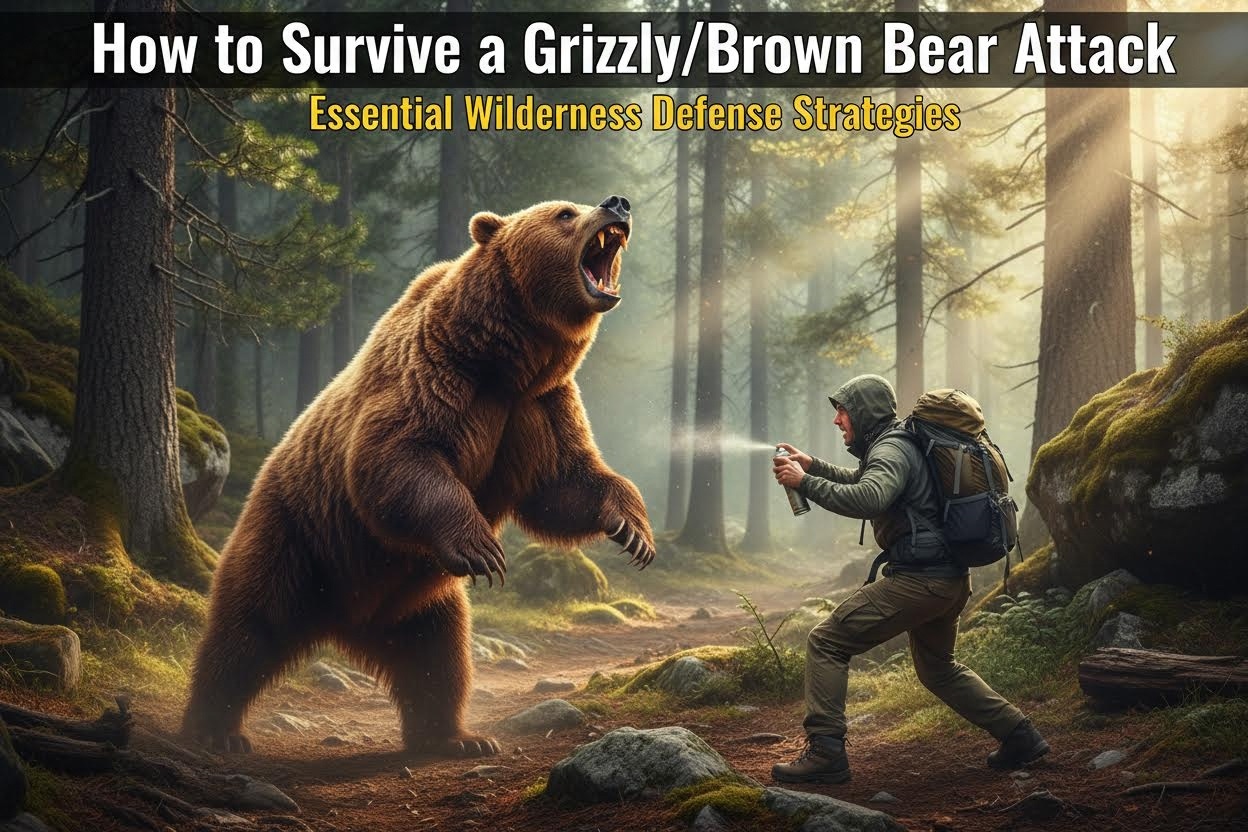
The best defense is bear spray. This specialized pepper spray reaches 30 feet and creates a deterrent cloud. Studies show bear spray stops aggressive bears 90-98% of the time. Carry it on your hip or chest strap—not buried in your pack. Practice deploying it at home with inert training canisters. Know how to remove the safety, aim slightly downward, and deploy in short bursts as the bear charges within 20-30 feet.
Physical defense against a grizzly bear attack depends on attack type. Defensive attacks require passive response. Lie flat on your stomach immediately. Clasp hands behind your neck. Keep your pack on—it protects your spine. Spread legs to prevent the bear from flipping you over. Remain motionless and silent until the bear leaves completely. Wait several minutes before moving. The bear may be watching nearby.
If the attack persists beyond initial contact, the bear may be predatory. Switch tactics immediately. Fight back with everything you have. Target the face, eyes, and nose. Use rocks, sticks, or your fists. Scream and stay aggressive. Predatory bears must believe you’re too much trouble to kill. Show no weakness. This scenario is rare but requires total commitment to violent defense. You’re fighting for your life.
How To Survive A Bear Encounter
Most bear encounters end peacefully. You spot a grizzly in the wild at safe distance. Back away slowly while keeping the animal in sight. Never run—running triggers chase instinct. Speak calmly and move sideways rather than directly away. Sideways movement appears less threatening while letting you monitor the bear’s response.
If you encounter a bear that notices you, identify yourself immediately. Say “hey bear” in a calm, steady voice. Wave your arms slowly above your head. Pick up small children without sudden movements or loud sounds. Stand your ground if the bear approaches. Most grizzlies will stop, assess, and leave. A bear that stands on hind legs is usually just investigating—not preparing to attack.
Watch for bluff charges. A grizzly may rush forward with head up, then stop short or veer away. This behavior tests your reaction. Hold your ground during a bluff. Backing away or running can trigger a real charge. A real charge differs from a bluff—head down, ears back, coming straight at you like a freight train. Deploy bear spray at 20-30 feet. If spray fails or you have none, prepare to play dead on impact.
Can You Defend Yourself Against A Grizzly Bear?
Physical defense against a grizzly depends entirely on attack motivation. Defensive attacks—where surprised bears or mother grizzlies with cubs react protectively—don’t respond to fighting. Punching a protective bear makes it more aggressive. These situations require playing dead. The grizzly wants to neutralize the threat you represent. Once you’re down and motionless, the threat disappears.
Predatory attacks demand opposite response. If a bear stalks you, watches you persistently, or attacks inside your tent, fight for your life. Use weapons if available—firearms, knives, or bear mace. Without weapons, target vulnerable areas. Gouge eyes, punch the snout, kick the throat. Make yourself too dangerous to eat. People have survived by fighting aggressively even barehanded.
Bear spray remains your primary defense. Much trust in bear spray is justified—it works. Unlike firearms, you don’t need perfect accuracy under stress. The spray creates a defensive barrier. Even a charging bear that runs through spray will be affected. The capsaicin causes intense burning in eyes, nose, and lungs. Most bears immediately retreat. Those that continue through spray arrive disoriented and less effective.
Are Black Bears Dangerous?
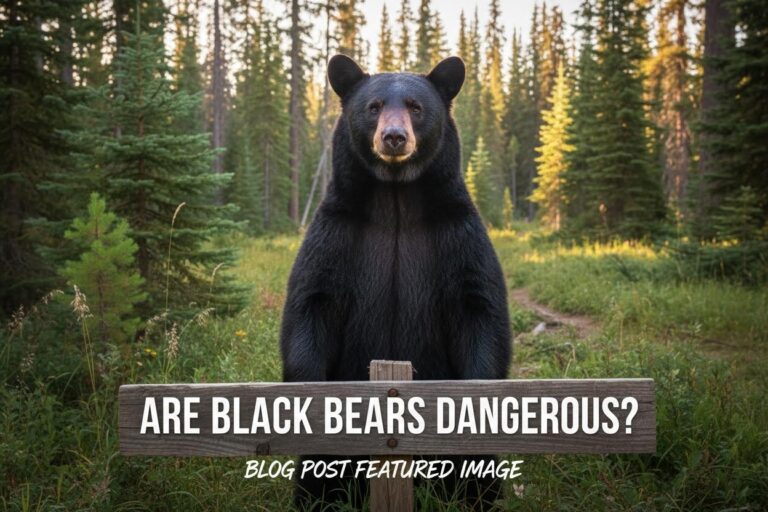
Black bears differ significantly from grizzlies. They’re smaller, less aggressive, and more likely to flee from humans. However, black bears still pose real danger. While attacks remain rare, they occur. Black bear attacks are more often predatory than defensive. This changes your survival strategy completely.
Never play dead with a black bear. If a black bear attacks, fight immediately with maximum force. Black bears are typically more timid than grizzlies, and aggressive defense often succeeds. Make yourself appear large, make loud noises, and throw objects. If physical contact occurs, punch, kick, and strike the face. Black bears usually retreat when prey fights back effectively.
Identification matters critically. Black bears aren’t always black—they can be brown, cinnamon, or blonde. Grizzlies aren’t always grizzled. Key differences include shoulder hump (grizzlies have one, black bears don’t), face profile (grizzlies have dished faces, black bears have straight profiles), and ear shape (grizzly ears are smaller and more rounded). In bear country, learn these differences. Your survival strategy depends on correct identification.
Recognizing Different Types of Bear Attacks
Not all grizzly attacks are equal. Defensive attacks occur when you surprise a bear or approach cubs inadvertently. The bear perceives you as a threat to itself or offspring. These attacks typically involve short, intense contact. The grizzly may bite, swat, or claw—then stop to assess. If you remain motionless, the bear usually leaves quickly.
Predatory attacks follow different patterns. A predatory bear shows stalking behavior. It circles, watches intently, and follows at distance. The bear may test your awareness by approaching from different angles. When it attacks, the assault is persistent. The animal doesn’t stop after initial contact. This type requires immediate, violent defense. There’s no de-escalation with a predatory bear.
Surprise encounters create the most common attack scenario. You round a corner or top a ridge and face a grizzly at close range. Neither of you had warning. The bear’s fight-or-flight response often chooses fight at close distances. Talk calmly, back away slowly, and prepare spray immediately. Don’t turn and run. Movement triggers chase instinct. Let the bear process that you’re human and not threatening.
Critical Gear for Grizzly Country
Bear spray is non-negotiable. Buy EPA-approved spray specifically designed for bears—not human pepper spray. Bears require higher capsaicin concentration and longer spray duration. Carry at least one canister per person, mounted where you can draw instantly. Practice the draw motion repeatedly until it becomes automatic. In a real charge, you’ll have seconds to react.
Additional gear improves safety. Bear bells attach to packs but offer limited effectiveness. Noise matters more than bells. Hiking poles can help you look larger and provide defense if needed. A whistle alerts others to danger. Proper camping equipment includes bear canisters for food storage and a tent with good visibility. Camp away from trails, food sources, and water. These areas concentrate bear activity.
First aid knowledge and supplies become critical after an attack. Grizzly bites cause deep puncture wounds. Claws create long lacerations. Carry pressure bandages, blood clotting agents, and emergency communication. Satellite messengers or personal locator beacons work where cell phones fail. In remote grizzly habitat, help may be hours or days away. Prepare for self-rescue and extended survival.
What to Remember: Key Takeaways
- Carry bear spray in accessible location and practice deployment before entering bear country—it’s your most effective defense with 90-98% success rate
- Make constant noise while hiking to avoid surprise encounters, which represent the highest risk scenario for grizzly attacks
- If you encounter a grizzly, identify yourself as human by speaking calmly and waving arms slowly—don’t run or make sudden movements
- Play dead during defensive grizzly attacks by lying flat on stomach with hands protecting neck, but fight back if attack persists beyond initial contact
- Never play dead with black bears—always fight back immediately with maximum aggression
- Watch for warning signs including teeth clacking, huffing, paw pounding, and pinned ears that signal an agitated or aggressive bear
- Store all food, toiletries, and scented items in bear-proof containers or approved hanging methods—never allow bear access to food
- Learn the difference between defensive attacks (protecting cubs or territory) and predatory attacks (stalking behavior)—your response differs completely
- Travel in groups when possible as bears typically avoid larger parties and multiple people make more noise
- Report all bear encounters to park authorities immediately to help officials track bear behavior and protect other visitors
About the Author