TL;DR: Two hikers were injured in a grizzly bear attack on the Mystic Falls Trail near Old Faithful in Yellowstone National Park, the first bear injuring a person inside the park since 2021. The hikers had reportedly seen bear prints in the mud shortly before the encounter, and the trail was closed while the incident remains under investigation. This guide breaks down what happened, what the National Park Service recommends if a grizzly charges you, and the bear safety habits every hiker should lock in before stepping into bear country, including why you carry bear spray, why you hike in groups, and why staying at least 100 yards away from bears is non-negotiable.
Two hikers were injured in a bear attack at Yellowstone National Park on Monday afternoon, May 4, on the Mystic Falls Trail near Old Faithful. It’s the first incident of a bear injuring a person in Yellowstone in 2026, and a sharp reminder that grizzly country isn’t a theme park. This breakdown covers what happened on the trail, what the National Park Service said, and the bear safety habits every hiker needs locked in before stepping into the backcountry.
What Happened on the Mystic Falls Trail Near Old Faithful?
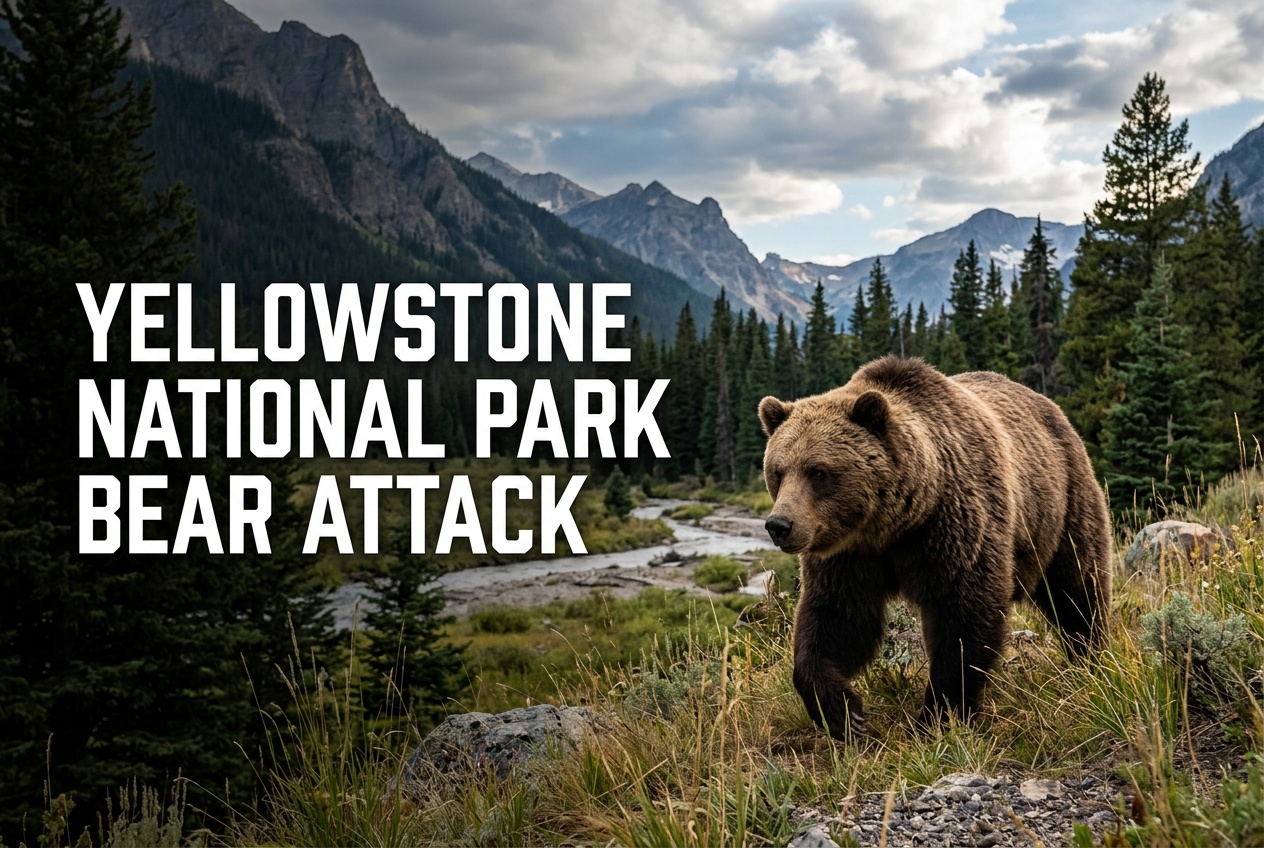
The National Park Service said two hikers sustained injuries by one or more bears on the Mystic Falls Trail near Old Faithful in Yellowstone. The bear attack Monday happened in the early afternoon, just a short walk from the iconic Old Faithful geyser. National Park Service emergency services personnel responded fast. Park officials have not released the species, the number of bears, or the condition of the hikers injured.
The trail is closed. So is a large surrounding area west of Grand Loop Road, from the north end of Fountain Flat Drive down to Black Sand Basin. That closure includes Biscuit Basin, the Fairy Falls Trail north of Grand Prismatic Overlook, several backcountry campsites, and fishing along the Firehole River. The incident remains under investigation.
This is the first incident of a bear injuring a person at Yellowstone National Park in 2026. The previous attack at Yellowstone occurred in September 2025, when a 29-year-old man was attacked hiking on the Turbid Lake Trail near the northeastern shore of Yellowstone Lake. The last fatal bear attack at the park occurred in 2015, in the Lake Village area.
Who Found the Hikers and What Did the Tracks Show?
A Maryland tourist named Craig Lerman was hiking up Mystic Falls Trail when he saw bear prints in the mud. He kept moving and spotted a bloody hat with a watch torn off in the dirt. Then he heard a voice. “Help. Help me.” Lerman called 911 and stayed with the victim, who was severely injured.
Based on the two sets of footprints he saw in the mud, Lerman believes a sow grizzly bear with a cub was likely responsible. The smaller and larger prints fit a mother and cub pattern. That tracks with how most defensive grizzly attacks unfold, especially in May when bears are coming out of hibernation and sows are fiercely protective of their young.
Park officials have not officially confirmed the species or whether one or more bears were involved. Both grizzly bears and black bears live in the park, and they can be hard to tell apart at distance. The investigation continues.
What to Do if a Grizzly Is Charging You?
Do not run. You cannot outrun a grizzly. Sprinting also triggers a predator response, which is the last thing you want. Stand your ground, get your bear spray out of its holster, and prepare to deploy it when the bear closes to about 30 to 60 feet. A heavy blast of spray to the face stops most charges cold.
Most grizzly charges are bluff charges. The bear is testing you, trying to convince you to leave. Plenty of charges end with the bear pulling up short and veering off. You still treat every charge as the real thing, because you do not get a second chance to react. Keep your spray pointed, talk in a low calm voice, and avoid sudden movement.
If contact is unavoidable, drop to the ground face down, lock your hands behind your neck, and spread your legs to make it harder for the bear to flip you. Keep your pack on. Stay completely still. The goal is to convince the bear you are no longer a threat so the attack ends.
Here’s the section, written in the same voice as the rest of the article and ready to drop into Gutenberg:
What’s the Best Bear Spray
Based on 2026 reviews and field testing, the SABRE Frontiersman MAX and Counter Assault are widely considered the best bear sprays on the market. Both run the EPA-maximum 2.0% major capsaicinoids, both throw a long-range cloud out to 30 to 40 feet, and both carry a 4-year shelf life. The UDAP GrizGuard is the third name worth knowing, especially if you want something easy to deploy single-handed on the trail.
Range is the spec that matters most. You want a spray that reaches at least 30 feet so you can stop a charging grizzly bear before contact. Counter Assault is the long-range king at 30 to 40+ feet with an 8+ second discharge, which gives you margin for a second blast if the first cloud misses. SABRE Frontiersman MAX matches that range at 40 feet and tends to be the value pick. UDAP GrizGuard runs about 30 feet and earns its reputation on handling, with a shape and trigger built for fast one-handed use under stress.
Top-Rated Bear Sprays for 2026
- Best Overall / Longest Range: Counter Assault Bear Spray (30 to 40+ foot range, 8+ second duration)
- Best Strength and Value: SABRE Frontiersman MAX (40-foot range, 2.0% major capsaicinoids)
- Best for Hiking and Ease of Use: UDAP GrizGuard (30-foot spray, easy single-handed handling)
Key Features to Look For
- Range: At least 30 feet so you can stop a charging bear before it reaches you
- Capacity: A 7.9-ounce to 10.2-ounce canister for enough spray time to deal with multiple bears or a missed first shot
- Formula: 2.0% major capsaicinoids, which is the highest concentration the EPA allows
- Holster: A belt or chest holster, never buried in your pack, so you can draw in under two seconds
- Expiration date: A 4-year shelf life is standard; check the date and replace expired canisters before your trip
One last thing the Mystic Falls incident drives home: the best bear spray in the world does nothing for you if it’s at the bottom of your pack. Wear it on your hip or chest strap, practice unholstering it at home, and treat it the same way a backcountry traveler treats a headlamp or a first aid kit. It’s not optional gear in bear country. It’s the gear.
How Do You Survive a Grizzly Bear Attack?
Surviving a grizzly bear attack starts before contact. Carry bear spray in an accessible holster on your hip or chest strap, not buried in your pack. Hike in groups when possible because grizzlies very rarely attack groups of three or more. Make noise on the trail, especially around blind corners, dense brush, and creek crossings where bears can’t hear you coming.
If a grizzly does make contact during a defensive attack, play dead. Lie flat on your stomach, clasp your hands behind your neck, and keep your elbows tucked to protect your face and ribs. Stay still even if it hurts. Wait until the bear has clearly left the area before moving, because bears often linger to confirm the threat is gone.
If the attack is predatory rather than defensive, fight back with everything you have. Predatory bears stalk you, follow you in silence, or attack at night around campsites. They are treating you as food. Use rocks, trekking poles, your knife, fists, anything in reach. Aim for the eyes and snout. The same rule applies to any black bear attack.
Why Do You Lay Down if It’s a Brown Bear?
You lay down for a brown bear, which includes grizzlies, because most grizzly attacks are defensive rather than predatory. The bear is reacting to a perceived threat, usually a sow protecting her cub, a bear guarding a carcass, or a sudden surprise encounter at close range. When you go limp and stop resisting, you stop being a threat, and most defensive bears disengage and leave.
Fighting back against a defensive grizzly usually escalates the attack. The bear already decided you were dangerous, and resistance confirms that. Playing dead removes the trigger. This is the opposite of black bear strategy, where you almost always fight back, especially if the attack happens at night or the bear is stalking you.
The hard part is identifying the bear. Grizzly bears have a noticeable shoulder hump, a dished face, and short rounded ears. Black bears have a straight facial profile, taller pointed ears, and no hump. Coloring is unreliable because both species come in brown, black, cinnamon, and blonde.
What Scares a Bear Away?
Loud noise, group presence, and unfamiliar human smells scare most bears away. The vast majority of bear encounters end with no injury because the bear hears, smells, or sees the human first and quietly leaves. That’s exactly why park officials tell you to make noise as you hike. You want to give every bear in the area an easy exit.
If a bear approaches your campsite or follows you on the trail, group up tight, raise your arms to look bigger, shout in a low firm voice, and bang trekking poles or pots together. Throwing rocks toward (not at the head of) the bear can work as a last resort before spray. Never run. Never turn your back. Never close the distance.
Bear spray is the gold standard for stopping a curious or aggressive bear. It works on grizzly bears and black bears, day or night, and it does not require precision aim under stress the way a firearm does. Multiple studies on attacks in Yellowstone and the greater Yellowstone ecosystem have shown bear spray is significantly more effective than guns at preventing injury.
Why Can’t You Swim in Yellowstone Lake?
You can’t swim in Yellowstone Lake because the water is dangerously cold year-round and the lake bottom drops off fast. Surface temperatures usually run 41 to 66 degrees Fahrenheit even in late summer. Cold-water shock and hypothermia can incapacitate a strong swimmer within minutes. Most drowning deaths in the lake involve cold exposure, not bad swimming.
Yellowstone Lake also borders critical bear habitat. Sections of shoreline fall inside a designated bear management area where access is limited to protect feeding sites and reduce conflicts between park visitors and bears. Some shoreline trails close seasonally for the same reason. Swimming puts you in the wrong place at the wrong time, both in terms of cold and wildlife.
You can paddle on the lake in designated zones with the right permits. Always wear a personal flotation device. Stay close to shore. Watch the sky, because storms build over the lake fast and the chop can swamp a kayak quickly.
How Do You Avoid Being Injured by a Bear in the First Place?
Stay at least 100 yards away from bears. The National Park Service treats this as a hard rule. If you can see the bear and you are inside 100 yards, you are too close and you need to back away without turning your back. The same applies to wolves. For all other wildlife, give at least 25 yards.
Carry bear spray and know how to use it. Practice unholstering and removing the safety before your hike. Hike in groups. Make noise. Avoid dawn, dusk, and full dark, because that’s when bears are most active. Skip carcasses, berry patches, and stream beds where bears feed. If you see bear prints in the mud or fresh scat, turn around. The Mystic Falls hikers reportedly saw bear prints before things went sideways, and that is the kind of warning sign every hiker needs to take seriously.
Store food properly. Use bear-proof containers and lockers at campsites. Cook and eat at least 100 yards from where you sleep. In the backcountry, hang food at least 10 feet up and 4 feet from the trunk, or use approved bear canisters. Bears that learn to associate humans with food eventually approach humans, and that ends badly for the bear and sometimes the person.
What Park Officials and the National Park Service Said
The National Park Service said the bear attack near Old Faithful in Yellowstone occurred Monday afternoon on the Mystic Falls Trail near Old Faithful, deep inside northwestern Wyoming. Park officials reminded park visitors to stay at least 100 yards from bears, carry bear spray, hike in groups, make noise on the trail, and stay alert when hiking in bear country. The investigation continues, and the closure remains in effect until further notice.
Yellowstone officials manage one of the densest grizzly populations in the lower 48. The greater Yellowstone bear population has rebounded from a low of around 136 grizzlies in 1975 to more than 1,000 today across Wyoming, Montana, and Idaho. The recovery is a real conservation win, but a healthy bear population means more encounters between bears and people every season.
Defensive attacks like this one rarely lead to bears being removed from the park. Wildlife biologists view a sow protecting her cub very differently from a bear that has lost its fear of humans. The investigation will determine what happened on the trail and whether any management action is warranted.
Lessons Every Hiker Should Take From the Mystic Falls Bear Attack
Attacks in Yellowstone are statistically rare. The park sees roughly one incident of a bear injuring a person every year or two on average across millions of annual visits. The bear attack near Old Faithful in Yellowstone is a sharp reminder that even the most popular, well-trafficked corridors near the iconic Old Faithful geyser sit squarely inside bear country. Two hikers were injured doing exactly what thousands of people do every week.
The takeaway is not to avoid Yellowstone. The park is one of the great wild landscapes left on the continent, and the wildness is the whole point. The takeaway is that you owe yourself the prep work. Bring the spray. Make the noise. Read the trail. Pay attention to bear prints in the mud. Respect the 100 yards rule. Hike with friends when you can. Trust your gut and turn around when something feels off.
Quick Hits to Lock In Before Your Next Hike
- Two hikers were injured in a bear attack at Yellowstone National Park on the Mystic Falls Trail near Old Faithful on Monday, May 4, 2026
- The species is unconfirmed and the incident remains under investigation
- Hiker Craig Lerman saw bear prints in the mud, found one of the victims, and called 911
- Carry bear spray in an accessible holster every time you hike in bear country
- Stay at least 100 yards away from bears and 25 yards from other wildlife
- Hike in groups of three or more, make noise on the trail, and avoid dawn and dusk
- For a grizzly attack, play dead by lying flat with hands locked behind your neck
- For any black bear or predatory bear attack, fight back hard and aim for the face
- Don’t swim in Yellowstone Lake because of cold-water shock and bear management area closures
- The trail is closed along with surrounding campsites and trail sections during the investigation
About the Author