If you’ve ever hauled a Jackery up a trailhead or fired one up during a power outage, you’ve probably wondered about the same thing I did: where does this box of electrons actually come from? The short answer is that Jackery power stations are designed by a California company and built mostly in China. But that barely scratches the surface. This article breaks down who owns Jackery, where the factories sit, whether any true American made solar generator exists, and how Jackery stacks up against rivals like EcoFlow and Bluetti. I spent a few hours digging through corporate filings, owner forums, Reddit threads, and manufacturer listings so you don’t have to.
Where Are Jackery Solar Generators Made?
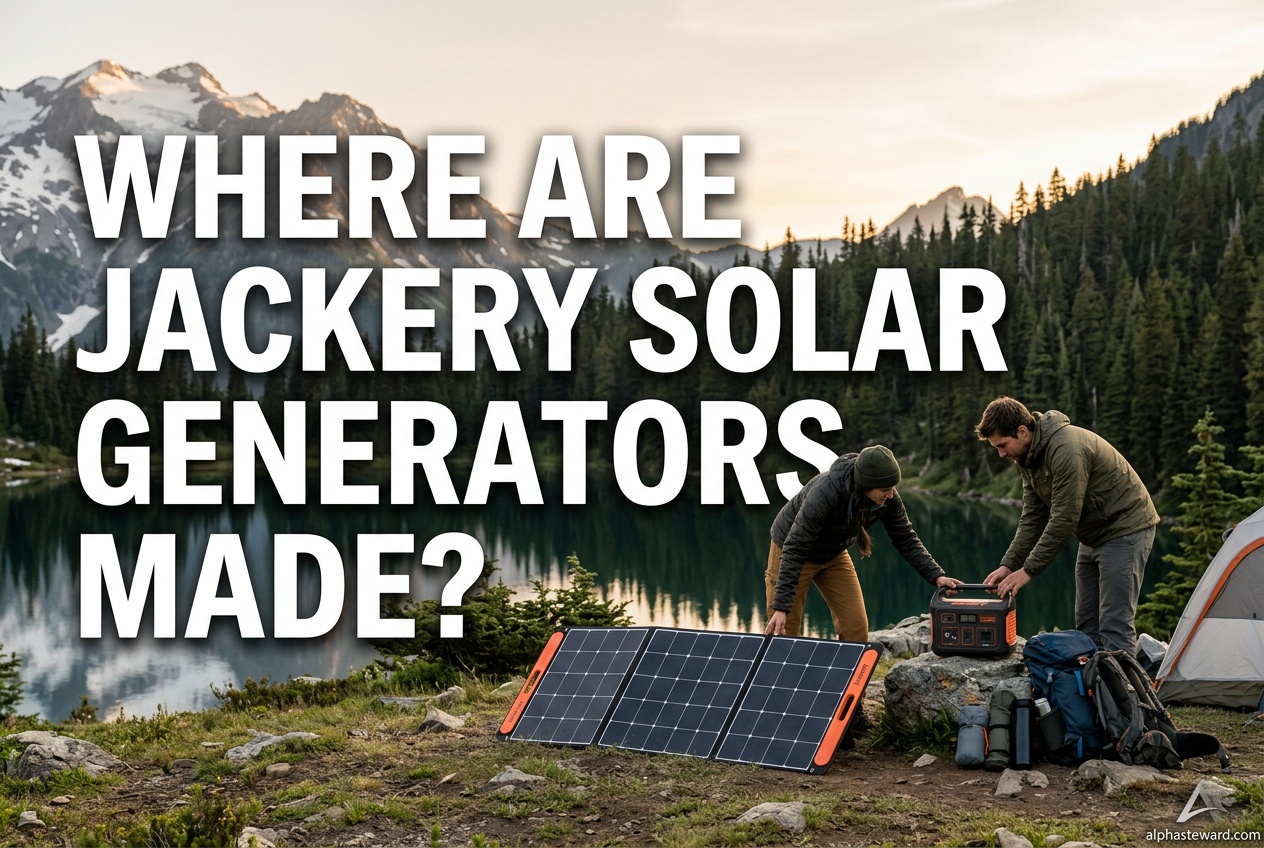
Jackery power stations and solar panels are primarily manufactured in China, specifically in Shenzhen, located in the Guangdong province. The company runs a self-owned factory there and also partners with contract manufacturers to leverage advanced manufacturing capabilities across the region. Final assembly, battery cell integration, inverter work, and quality control all happen on that side of the Pacific before units get packed and shipped globally.
That answer surprises some buyers because Jackery’s marketing leans heavily on its California roots. The company was founded in Fremont, California, and the U.S. headquarter still operates there. Design, brand strategy, and the customer support team are handled stateside. The manufacturing itself, though, follows the same path as nearly every other lithium battery product in this category.
Who Is the Jackery Company and When Was It Founded?
Jackery was established in 2012 by a former Apple senior engineer named Z Sun. The company was founded in California with a simple mission: make efficient power portable enough to take anywhere. In 2015, Jackery launched the first lithium portable power station on the market, which kicked off what we now call the solar generator industry. The Explorer series, their top-selling line, grew out of that early product.
Today Jackery has shipped millions of products to customers in more than 100 countries. Forbes once called it the Apple of portable power devices, and the brand has collected design awards from the German Red Dot committee and CES alike. The core lineup covers everything from the 100W SolarSaga panel to the Explorer 5000 Plus, which can serve as whole-home backup when you chain a battery pack onto it.
Is Jackery a Chinese Company?
Calling Jackery “Chinese” or “American” isn’t quite right. The honest framing is that Jackery is a cross-border company. Corporate headquarters and product design live in Fremont, California. Manufacturing, engineering staff, and supply chain operations live in Shenzhen. The parent entity, Shenzhen Hello Tech Energy Co., is listed on the Shanghai Stock Exchange, which means ownership is mostly held by Chinese investors.
None of that should scare you off. Most consumer electronics follow this pattern, from your phone to your laptop. What matters more for buyers is whether the company stands behind its products, and by most measures, Jackery does. A stateside customer support team handles warranty claims, and the company offers up to five years of coverage on newer LiFePO4 models.
Is Jackery Made in the US?
No, Jackery is not made in the US. The brand is headquartered in California and the products are primarily manufactured in China. You will occasionally see listings that claim “assembled in the USA” on third-party sites, but those are usually inaccurate or refer to re-boxing by distributors. Every Jackery Explorer unit, every SolarSaga panel, every battery pack I’ve inspected carries the “Made in China” stamp on the label.
If country of origin is a dealbreaker, that’s fair. Plenty of buyers feel strongly about supporting domestic manufacturing or worry about geopolitical supply chain risk. Jackery is transparent about where their products are made, and the company has invested heavily in automated production lines that keep quality consistent across the millions of products they ship each year.
How Are Jackery Power Stations and Solar Panels Manufactured?
The manufacturing process for a Jackery solar generator breaks down into two tracks. The power station side involves lithium battery cell sourcing (newer Explorer models use LiFePO4 chemistry for longer lifespan), BMS and inverter assembly, injection-molded housing, and final QA testing. A LiFePO4 power station from Jackery is rated for roughly 4,000 charge cycles, which translates to about ten years of regular use.
The photovoltaic side is where Jackery’s SolarSaga panels come together. These use monocrystalline cells laminated under ETFE film to handle rough outdoor use. Jackery has also developed a curved solar panel design, the SolarSaga 100 Prime, which sets up faster in the field than the old folding style. Every panel gets weatherproofed to IP68 standards before shipping.
Quality on these Jackery power stations is genuinely solid. I’ve dropped, soaked, and baked mine in the Jalisco sun without a single failure. The durability reputation isn’t accidental. Shenzhen is the global capital of battery and electronics manufacturing, and Jackery leverages advanced manufacturing capabilities that simply don’t exist at scale anywhere else right now.
Are There Any Solar Generators Made in the USA?
Yes, a handful of solar generators are genuinely made in the USA, though the list is shorter than most people expect. Point Zero Energy builds its Titan power generator line in Idaho. Lion Energy assembles some of its products in Utah. Humless manufactures in Lindon, Utah. Inergy does some U.S. assembly as well. These brands tend to cost significantly more than a comparable Jackery, often two to three times the price for similar wattage.
Here’s the catch worth understanding: even “made in the USA” solar generators rely on battery cells, inverters, and solar panels sourced overseas. True end-to-end domestic production of a full solar generator doesn’t really exist yet. The United States doesn’t have the lithium cell manufacturing base to pull it off at consumer price points. So when you see “American made solar generator” marketing, read the fine print. It usually means final assembly happens in the USA while individual components still come from China, Korea, or Japan.
How Does Jackery Compare to EcoFlow and Bluetti?
Jackery, EcoFlow, and Bluetti are the big three in portable power, and all three are Chinese companies with U.S. operations. EcoFlow is based in Shenzhen. Bluetti is also headquartered in Shenzhen under parent company PowerOak. All three brands manufacture the bulk of their power stations and solar panels in the same Guangdong manufacturing corridor.
Where they differ is feature philosophy. Jackery focuses on clean design, easy operation, and consumer-friendly software. EcoFlow pushes aggressive fast-charging tech and higher wattage output. Bluetti tends to lead on expandability and off-grid living scenarios with modular battery pack options. For outdoor use, camping, and home backup, all three deliver reliable power. Choosing between them usually comes down to price, ecosystem, and whether you like the interface.
Is There Anything Better Than Jackery?
Better is subjective, but yes, some brands beat Jackery in specific categories. If you need maximum output for heavy appliances, EcoFlow’s Delta Pro Ultra edges out the Jackery 5000 Plus on raw wattage. If you want fully modular off-grid living setups, Bluetti’s AC500 system is more flexible. If domestic manufacturing matters most, Point Zero Energy’s Titan delivers in a class of its own.
For most outdoor folks and everyday home backup use, though, Jackery holds up well. The reliability track record, the customer support team responsiveness, and the ease of recharge from either wall, car, or solar panels make Jackery’s products hard to beat on value. I keep recommending them to friends who want solar energy they can actually carry without a degree in electrical engineering.
Who Makes the Most Reliable Solar Generator?
Reliability is where Jackery genuinely earns its reputation. Their LiFePO4 power station models, including the Explorer 1000 Plus, 2000 Plus, and 5000 Plus, come with a five-year warranty and a 4,000-cycle battery rating. That’s better than many wall-powered UPS systems you’d install at home.
Bluetti and EcoFlow are close behind on reliability metrics. Goal Zero (an American brand based in Utah, but also manufactured largely overseas) has strong reliability on its Yeti line, though the recharge speeds lag behind newer Jackery and EcoFlow units. For sheer peace of mind during a blackout or extended outage, I’d put Jackery at the top of the list for home backup scenarios under 5kWh, EcoFlow for larger whole-home setups, and Point Zero Energy if you want a made in the USA option and don’t mind paying extra.
What About Jackery’s Sustainability Commitments?
Sustainability is part of the pitch with any solar generator, and Jackery leans into green energy messaging. The company has committed to a 100% clean energy transition across its operations and has launched tree-planting programs in California and Japan. Their product design also emphasizes longevity: the LiFePO4 lithium battery chemistry in newer Explorer models reduces replacement frequency, which matters if you care about sustainable consumption.
Now, is that enough? Reasonable people disagree. Shipping units from Guangdong to the United States carries a carbon footprint no marketing campaign can fully offset. But compared to running a gasoline generator every time the grid goes down, a Jackery solar generator paired with solar panels is a measurably cleaner choice for backup power. That’s why I packed mine into the truck and never looked back.
What to Remember Before You Buy
- Origin: Jackery was established in 2012 in Fremont, California, and the company was founded by a former Apple engineer.
- Manufacturing: Jackery’s products are primarily manufactured in China, mostly in Shenzhen, Guangdong.
- Made in the USA? No Jackery units are made in the USA. Real American-made options include Point Zero Energy Titan, Lion Energy, Humless, and Inergy.
- Battery tech: Newer Explorer and Solar Generator models use LiFePO4 lithium battery chemistry with around a 4,000-cycle lifespan.
- Rivals: EcoFlow and Bluetti are also Chinese-manufactured and compete directly with Jackery on price and features.
- Reliability: Jackery ranks among the most reliable solar generator brands for home backup, camping, and off-grid living.
- Sustainability: Jackery has committed to 100% clean energy transition goals and emphasizes product lifespan and recyclability.
- Support: U.S. customers get help through a stateside customer support team with warranties up to five years on newer models.
- Best use cases: Outdoor use, emergency backup power, RV trips, blackouts, and off-grid cabins where reliable power matters most.
About the Author